Monday, February 23, 2015
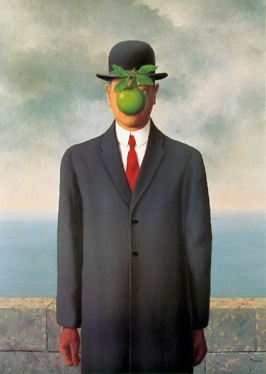
Power: Macbeth's Apple

Guernica and Shakespeare
Pablo Picasso’s Guernica is strikingly similar to Shakespeare’s Macbeth. The painting Guernica represents the horrors displayed by the Nazis during the practice bombing of the city Guernica. Macbeth also deals with the horrors of killing, and the tragedies that war can bring. Guernica and Macbeth both also deal with some psychedelic aspects of war as well. Picasso’s painting depics several animals and bodies, as well as a warped sun. On the left of the painting there is a chimney with smoke coming out. These aspects play on the mind of the view as the killing of Duncan and Banquo play on the mind of Macbeth. The smoke coming out of the chimney on the left of the painting seems to suggest that while the horrors of war are occuring, life goes on. This can also be seen in Macbeth with the doctor. The doctor knows that there is no more oppertunity in Macbeth’s castle, so he leaves as soon as he can. The doctor knows that life will go on after the war, so he must plan accordingly. The carnage depicted in Guernica represent the carnage that war can bring. Like in Macbeth however, it is not humans. The majority of Guernica is animal carcasses, and Shakespeare uses trees and the forest to depict the horrors. Guernica and Macbeth both deal with the tragities of war, and makes the reader or viewer think about all of the death and destruction that war can bring.
http://www.pablopicasso.org/guernica.jsp
http://www.pablopicasso.org/guernica.jsp
The Threat of Being Killed Through Time
In Shakespeare’s Macbeth, characters are killed left and right. Most of them fall victim to the weapons of the time period: swords, daggers, and the like. In modern times, people live under a far greater shadow: the impending nuclear holocaust. A threat illustrated in a beautiful, yet terrifying, way by artist Isao Hashimoto. His video, “A Time-Lapse Map of Every Nuclear Explosion Since 1945” shows all 2056 nuclear explosions that have ever occurred on Earth. The piece is beautiful, thought-provoking, and extraordinarily information-dense. In his video, which consists almost entirely of a map, Hashimoto assigns every nation a color and tone. When that county detonates a nuclear weapon, the country’s tone is heard and a flash of the country’s color appears in the exact geographic location where that weapon exploded. Watching the video creates an eerie song as each nation’s tone is heard. The viewer can learn a lot about the history of nuclear weapons by watching the video.
In Macbeth’s time, people, especially those in power, had to live in fear of being attacked by an assailant with a blade. Today, people worry about the chances of the world being blown to smithereens by mutually assured destruction. This change parallels other changes in society. As technology improves, society becomes more globalized, with billions of people interacting in a less-personal, virtual way. This contrasts to the times in which Macbeth lived, where it would have been rare to meet someone from a different town that your own. Duncan worried–though perhaps not enough–about being murdered by someone he knew personally. Conversely, people now live with the threat of being blown up by some across the globe who could never know your name. The threats that society lives with remain, though in different forms. And even though modern technology makes it possible to kill millions at once, a given person now is no more likely to die as a result of nuclear attack than a given person in Macbeth’s time.
Sunday, February 22, 2015
A Ruined Mind and Ruined Relationships
 |
| Land of Wandering by David Fedeli |
Macbeth has a recurring theme of death. Not only is the theme about the
death of people around Macbeth, but also the death of former relationships and
kingdoms. In David Fedeli’s painting, “Land of the Wandering,” there is man
walking back to what seems to be ruins. As a connection to Macbeth, there
is the death of his rule, his family, his former friends, and trust. As Macbeth
goes on, Macbeth orders people to be executed. Some that were close to him,
but they were seen as the enemy. They were seen as a threat to his gain in
power as time went on. This was the serial killing of people, relationships,
and the fall of a formerly strong kingdom.
This
painting could foreshadow what Macbeth sees as he is dying. It could be
interpreted as Macbeth trying to return home thinking that there will be people
waiting for his arrival, but in reality there is no one there because of his
ruined relationships with those he was once close with. He is waking up after
death, as he walks into to the deserted land of wandering. It’s a place where
he will be lonely, ridden with the thought of all the people he killed just to
have as much power as possible. A place made just for him to experience what
it’s like to be left with nothing. A place where he will be in continuous
isolation and self reflecting, because of the greed for power and a fear of
people getting in his way.
Exploration of Immortality: Macbeth and Dalí

Salvador Dalí explored many different parts of life in his paintings as did Shakespeare in his plays. Macbeth has much in common with one of Dalí’s most famous works, “The Persistence of Memory.” The painting revolves around the “melting clocks” which question the significance of time. Throughout Macbeth’s reign as King of Scotland, he toys with the idea of time and how much it matters. As Macbeth gains ultimate power as King, he feels immortal. Many of the decisions that Macbeth makes as the “Immortal King of Scotland,” bring him down in the end. His decision to kill Banquo, his best friend, and Banquo's son, Fleance, haunt him until his death. The title of Dalí’s work, “Persistence of Memory,” embodies the nature of Macbeth’s downfall. His terrible decisions to kill remain in the forefront of his memory and deteriorate his seemingly immortal being. Immortality is expressed in Dalí’s painting through the clocks that physically stretch time and in many ways seem to make it stop all together. In Macbeth’s famous “Tomorrow” soliloquy he discuss the ideas of time and death and their relation. He questions the timing of Lady Macbeth’s death, but cannot seem to feel grief over the loss of someone who was once his true love. After Lady Macbeth’s death, Macbeth plays a waiting game. He knows that Macduff will soon be at his doorstep to kill him. In Dalí’s painting the soft clocks parallel Macbeth’s train of thought. Macbeth does not seem care whether or not he dies, and the contorted clocks evoke the same idea. Does time matter?
Macbeth and Migrant Mother
 During the 1930’s, the United States went into economic strife following the crashing of the stock market. Millions of people lost their jobs and found themselves on the streets with little to no money or resources to support themselves or their families. The families during this time often had to move around to find new homes and available work. Each family had their own unique labors that came from the crash and everyday was a struggle to get through. In addition the casualties of this depression were immense because of the lack of food and resources. In Dorothea Lange’s Migrant Mother, this mother seen with two of her seven children are shown in great distress. However, the mother looks numb to this pain most likely feels responsible to be the source of strength for her family. In Shakespeare’s Macbeth a certain numbness to pain is evident in his “tomorrow, tomorrow and tomorrow” speech in act V. The casualties in this tragic play were both substantial and painful for Macbeth despite his role in them. This speech follows the death of Lady Macbeth and from his tone the death does not seem to take a toll on his overall goals. Learning of a death would be paralyzing for many people but after the amount to deaths that came from the conflicts in the play, death loses its significance. In both Macbeth and during the Great Depression, death lost some of its meaning and though painful, people became numb to it. In Lange’s photograph the pain in the woman’s eyes is piercing however it is not paralyzing to her just as the pain of Lady Macbeth’s death was not paralyzing to Macbeth.
Macbeth and The Useless Machine
For hundreds of years, Shakespeare has been known as one of the most brilliant writers in the world, perhaps even the greatest. English classes and teachers all around the world teach and learn Shakespeare’s works of art. One of his most famous pieces is his play titled, Macbeth. Macbeth is regarded as one of the greatest plays of all time; however, what is its actual worth and value? The whole play concentrates on a man named Macbeth who throws his life away, kills his best friend, kills the King of Scotland, and indirectly kills his wife by creating extreme turmoil and finally ends up dead, all for nothing. To some people, the entire play seems to be pointless. If the average play were to have so many deaths, many would be led to believe that the main character would at least achieve his final goal. This “pointlessness” relates extremely similarly to the “Useless Machine” invented in 1952 by a professor from MIT. To operate this machine, one must flip a switch which lifts the top of the machine and allows a mechanical hand to come out and flip the switch back off, which in turn turns the entire machine off. In both this machine and the plot of Macbeth, the beginning and ending is fairly similar, with no one specifically achieving what they want. To some, this leads to thinking why either the play or the machine was invented. Both the machine and the play question the idea of free will. In the beginning of Macbeth, Macbeth believes he is killing King Duncan by his own will; however, this quickly transformed into his wife’s, Lady Macbeth. Similarly, this machine creates a need to always re-flip the switch by flipping it off itself because for some reason, some people think they can trick it and “beat” the machine. Both the play Macbeth and the “Useless Machine” demonstrate something extremely pointless, yet also complex. See how truly useless this machine is: http://www.youtube.com/watch?v=Z86V_ICUCD4
Macbeth and This Painting of Adam and Eve

This painting of Adam & Eve reminds admirers of it of the story that goes along with it. The story this painting tells is incredibly similar to the story of Macbeth. In Macbeth, Macbeth and his wife are in the King’s favor. They are treated extremely well, and are pampered at feasts and ceremonies. In addition to this, the King rewards them by giving them a new area to rule, when he makes Macbeth the Thane of Cawdor. However, this was not enough for Macbeth. Macbeth had wanted more ever since the three witches had told him that he was going to be king. However in attempting to gain more, he and his wife lost everything in the end, and died disgraceful deaths.
Lady Macbeth and Marilyn Monroe: Enigmatic Women
Shakespeare’s
Macbeth connects to Andy Warhol’s pop
art painting of Marilyn Monroe because both of these works prominently feature
enigmatic women. At the forefront of Macbeth
is the character of Lady Macbeth, who is the driving force behind Duncan’s
murder. However, later in the play, Lady Macbeth is plagued by intense feelings
of remorse. She sleepwalks and tries to scrub away nonexistent bloodstains.
Towards the end of the play, Lady Macbeth flings herself off of the balcony,
presumably because she could not handle the guilt from Duncan’s murder. To the
untrained eye, Lady Macbeth was simply a beautiful, young queen. When examined
further, however, Lady Macbeth becomes a puzzling character. One of Warhol’s
most famous works consists of multiple pictures of Marilyn Monroe silkscreened
in different colors. Marilyn Monroe, like Lady Macbeth, was in a position of
power in society. While she may not have been as evil or conniving as Lady
Macbeth, she certainly had some flaws. Monroe allegedly had an affair with
President Kennedy, who was married at the time. Just like that of Lady Macbeth,
there was a significant amount of controversy surrounding Monroe’s death. She
was found in her bed with an empty bottle of pills and a phone in her hand, but
the witnesses and timelines surrounding her death are inconsistent. On the
surface, Monroe was a beautiful woman, a sex symbol, and a role model for many.
But underneath the façade was a very different person, one who cheated and
lied. While these women existed hundreds of years apart, they were both enigmatic
to the core.

Caesar, Macbeth, and yes, Death

A
prevalent theme in the play of “Macbeth” is that of death. The painting above
depicts Cesar, arguably the most successful Roman Empire to ever live, being
stabbed to death by his senators, including his best friend Brutus. Cesar lived
a life that people can only dream of. He had an affair with the beautiful
Egyptian Pharaoh Cleopatra, enjoyed luxuries because of his high status as
emperor, and maintained power over a massive and powerful country. His reign
compared to Macbeth, the King of Scotland, not in how he achieved it, but in
the way that any people in positions of power compare to one another; they both
have a lifestyle limited to a select few people and supreme power and
influence. Death for Cesar, depicted in the painting above, directly relates to
Macbeth because it is what makes them equivalent to any other member of the
global community. It is permanent and the same for everyone. Caesar and Macbeth
had the luxury of being powerful, and when they were killed (as a result of
mistakes made with that power) they were dead. Their high status no longer
mattered, nor did their power or influence. it put them both on the same level
as any other living thing in the world. Death for Macbeth, Caesar, and anyone
is equitable and permanent.
Subscribe to:
Posts (Atom)