Wednesday, March 21, 2018
The Ostracizing of Political Association Based Upon Generalizations
That's a long, wordy title. Let me explain. More and more I see articles about people who lean more to liberal or conservative than his or her demographic, and they are scared to share his or her beliefs because they see others getting ostracized, excluded from everyone else. This is happening because of predetermined stereotypes, like "ALL conservatives are Pro-Life, Pro-Gun, Pro-God" and "ALL liberals are young college millennials who just want money from the government". These assumptions are dangerous. They automatically alienate a massive portion of the population. In an article written by Tom King, a Democrat that is also a very orthodox Christian, presents the fact: One can be a Democrat, but also have traditional religious views and vice-versa that not all Republicans are strict Christians, for example. In these politically troubled times, people seem to forget that identifying with one political party doesn’t necessarily mean that person agrees with every single belief of the party. Something that I was shocked by is the fact that six of seven justices that voted for Roe v. Wade (a case that would legalize abortion), were Republicans. So next time you meet someone with opposing views and values, listen to what they have to say and keep emotion out of it. Then you're allowed to avoid them.
Tuesday, March 20, 2018
EINTY- The Struggles of Communication
Every family has its problems. I think we all can relate to this statement but just how much? Celeste Ng dives into a particular families issues in her novel Everything I Never Told You. She reveals how lack of communication between parents and their kids can lead to emotional consequences.
In this novel, when Lydia, the family favourite, is found dead the rest of the family is left trying to cope. But before Lydia was found dead this family still had many problems. It all started when Marilyn and James first married and made a pact, “To let the past drift away, to stop asking questions, to look forward from then on, never back” (Ng 49). This changed the way they lived, talked to each other, and raised their kids. They never tell their kids about what they went through in school, how Marilyn experienced sexism and how James experienced racism. This causes their kids to believe their parents don’t understand what they are going through during the school day. So, instead of confiding in their parents, Nath, Lydia and Hannah close themselves off—not having a healthy outlet to talk to.
Lydia was also HEAVILY favored by her parents, while her siblings, Nath and Hannah, were ignored.
Marilyn and James focused all their time on Lydia, working extremely hard to make sure Lydia would not have the same childhood that they had. Marilyn wants for Lydia to be a successful, independent woman while James wants Lydia to be popular and have asocial life. Parents putting pressure on their kids is normal, but Marilyn and James push Lydia an unreasonable amount. Ng communicates this weird family dynamic when she writes about James buying Lydia a book on, “How to Win Friends and Influence People” (Ng 175). James does not tell Lydia how he understands what it’s like to be the only Asian at a school, or how all he wants is for Lydia to have more of a social life than he did. And because James doesn’t say any of this to Lydia, she is left offended and hurt.
All the characters in the novel have so much to say, yet they don’t know how to say it. Ng portrays this exceptionally in Everything I Never Told You. She writes from different characters perspectives showing us what each character is thinking—but not saying. Ng reveals just how much lack of communication between parents and their children can create an unhealthy environment for the kids to grow up in. Her effective writing caused me to think about family dynamics and unnecessary pressures that parents put on their kids. Everything I Never Told You relates so much to modern day families and parent-child dynamics. Her interesting storyline following a mixed race family, along with her writing style creates an engaging and eye opening story, which I really enjoyed.
In this novel, when Lydia, the family favourite, is found dead the rest of the family is left trying to cope. But before Lydia was found dead this family still had many problems. It all started when Marilyn and James first married and made a pact, “To let the past drift away, to stop asking questions, to look forward from then on, never back” (Ng 49). This changed the way they lived, talked to each other, and raised their kids. They never tell their kids about what they went through in school, how Marilyn experienced sexism and how James experienced racism. This causes their kids to believe their parents don’t understand what they are going through during the school day. So, instead of confiding in their parents, Nath, Lydia and Hannah close themselves off—not having a healthy outlet to talk to.
Lydia was also HEAVILY favored by her parents, while her siblings, Nath and Hannah, were ignored.
Marilyn and James focused all their time on Lydia, working extremely hard to make sure Lydia would not have the same childhood that they had. Marilyn wants for Lydia to be a successful, independent woman while James wants Lydia to be popular and have asocial life. Parents putting pressure on their kids is normal, but Marilyn and James push Lydia an unreasonable amount. Ng communicates this weird family dynamic when she writes about James buying Lydia a book on, “How to Win Friends and Influence People” (Ng 175). James does not tell Lydia how he understands what it’s like to be the only Asian at a school, or how all he wants is for Lydia to have more of a social life than he did. And because James doesn’t say any of this to Lydia, she is left offended and hurt.
All the characters in the novel have so much to say, yet they don’t know how to say it. Ng portrays this exceptionally in Everything I Never Told You. She writes from different characters perspectives showing us what each character is thinking—but not saying. Ng reveals just how much lack of communication between parents and their children can create an unhealthy environment for the kids to grow up in. Her effective writing caused me to think about family dynamics and unnecessary pressures that parents put on their kids. Everything I Never Told You relates so much to modern day families and parent-child dynamics. Her interesting storyline following a mixed race family, along with her writing style creates an engaging and eye opening story, which I really enjoyed.
Decided career?
Who cares about your interests? Your path was already chosen by your parents since birth. “You shouldn't choose a career path because you love it; you choose a career and learn to like it.” The different opinions between children and parents brings up the controversial question: Do you or your parents choose your future?
According to a study done, the top three jobs parents wanted their children to be were engineers, doctors, and scientists. Therefore, the fear children face of disappointing their parents, lead most of them to give up their dreams. Unfortunately, the few students who stick up for themselves and refuse to follow their "chosen path," are considered disobedient.
In the short story "Two Kinds" by Amy Tan, Jing-Mei faces the same problem as well. Fighting against her mother's thoughts on obedient vs disobedient child, she refuses to be her mother's "source of pride." Jing-Mei takes a different stance and strongly agrees with the statement: “A disobedient child does not describe a person resisting from being a someone other than themselves.”
Sometimes, disobedience is the key to discovering who you are as a person. "Your parents know best" may not always be necessarily true. Students! It may be important to please your parents but please do not forget who you are.
Students Beware: 3 Consequences of Your Parents' High Expectations
Picture this: it's 1:00 am. Your face is basking in the soft glow of the computer screen. Your history paper, which is due tomorrow, remains incomplete, but the mere though of the your parents seeing anything under a 90 pushes you to keep your eyes open. Sound familiar? It's safe to say that most parents want their children to be happy and successful. Their high expectations are made with only good intentions in mind. However, this may not be the best way encourage academic success.
A recent novel titled Everything I Never Told You helps portray the difficulty faced by many pressured adolescents. Author Celeste Ng details the downward spiral of teenage girl Lydia Lee as she deals with her parents pressure for success as well as how both her parents experiences and her own lead to her eventual suicide. (I highly suggest you give it a read! For a more detailed book review, click here.) As outlined in the story, there are three main outcomes from situations such as this one.
1. Feeling Overwhelmed
Stress is unavoidable. It is normal to feel a overwhelmed every now and then, but it becomes a problem when it starts to interfere with daily life. The issue with academic pressure is that it is hard for students to stand up to their parents when it becomes to much. Lydia's fear of disappointing her mother prevents her from saying no to her mother's constant push to excel.
2. Loss of Self Identity and Goals
Adolescence is time of self discovery and finding a path in life. However, this natural process can be seriously tampered with when parents try to fit their child into a mold of what they feel is the perfect student. Similar to this, Lydia's mother was not able to achieve her own goals, and as a result, she forced those dreams onto her daughter.
3. Neglect of Other Siblings
High academic pressure being placed on you may backfire on both you and your siblings. The constant focus on one student can mean that other children do not receive the same amount of support and attention, often resulting in jealously, low self-esteem, and erratical behavior. For example, Lydia's two siblings were constantly neglected as their parents increasingly focused on Lydia's success. Obviously, if you are a single child, this doesn't really apply to you directly. However, a parent's own ambitions and relationships can also be affected.
The effects of academic pressure are not just limited to these concrete effects. Much more serious consequences can also occur. Children with parents who put immense value on achievement have been proven to experience depression and anxiety, making it less likely more then to excel in the end. (If you want to read more in detail on the psychological impact, click here.)
If you happen to find yourself facing similar struggles, remember that communication is the first step in resolving any issue with family. Understand that your parents want to see you happy and successful, but make sure to explain how their parenting strategy may not be working in your best interest. Ultimately, not every parent will lay off of achievements, but that's not the end of the world. Just keep in mind that the most important thing is that you are satisfied with your successes (while making sure that's not based on the values of your parents) and choose a path in life that makes you the happiest. (This doesn't mean you should stop studying though!)
Serial is Cereal to Your Brain
Sarah Koenig, the author of the acclaimed podcast, Serial, knows how to keep you on your toes. But what makes her work so intriguing? Well, a couple things. For starters, the content of the podcast is something that weighs heavy in anyone’s heart, murder. But what makes HER way of telling it so juicy and keeping the listener compelled to come back for more. Well, many people admire the fact they’re able to hear a human voice; Adnan, the convicted murderer, along with others that played a role in the ongoing mystery show up countless times throughout the series. It gives the listener a sense of connection that is partially lost through just words. To go along with the peodcast medium, Koenig’s personality and charisma is perfect for the role she takes on. I fell in love with her merely by how she spoke (figuratively speaking of course). Well the point I’m trying to make with all this is, using a variety of mediums besides plain paper text enhance learning to a whole new level. Don’t just be bogged down by words, explore the other ways you can obtain information and find the one that keeps you engaged and sticks to your brain like gum under a seat hours, days, even months after you walk away from it. Don’t be afraid to expand the mind a little.
Russo
Russo
Fire or Ice?
Fire or Ice: Does it Really Matter?
The English poet Robert Frost once wrote a pithy poem on how the end of the world would come-either in fire or ice.
Fire and Ice
BY ROBERT FROST
Some say the world will end in fire,
Some say in ice.
From what I’ve tasted of desire
I hold with those who favor fire.
But if it had to perish twice,
I think I know enough of hate
To say that for destruction ice
Is also great
And would suffice.
Not surprisingly, in the poem, people start taking sides. In real life, like how people cannot agree on whether the apocalypse should happen in fire or ice, people debate about everything. Let's talk about poems here: People do not come to an agreement on whether long poems or short poems are better.
In poetry, there are very long works, epics-The Odyssey and The Iliad by Homer, The Divine Comedy by Dante, and the Sumerian Gilgamesh; there are also some other pieces, shorter than these, but still comparatively long, "The Raven," by Edgar Allan Poe, for instance, and there are plenty of short- almost pithy works(most poems studied at schools are) like “Fire and Ice.”
"Long" vs. "Short"
Now, take another look at this criteria used to compare poetries-the two adjectives for length-"long" and "short." What is considered "long" and what is considered "short?" Are twenty words short? Fifty? Maybe a three hundred? Sure, "The Raven" is pretty long. What about the Odyssey then? Well, the thing is, there is not a definite boundary between the two. Quantifying the length of poems to judge them seems pretty logical, but it is as absurd as measuring how many drops of water there are in two mugs and comparing them to each other.
How do we compare two poems? We can't. If you were to compare the water in a mug to the water in a pool, it wouldn't make sense for you to choose the pool when you are thirsty, and the pool is clearly the better option if you want to swim.
You get the metaphor right?
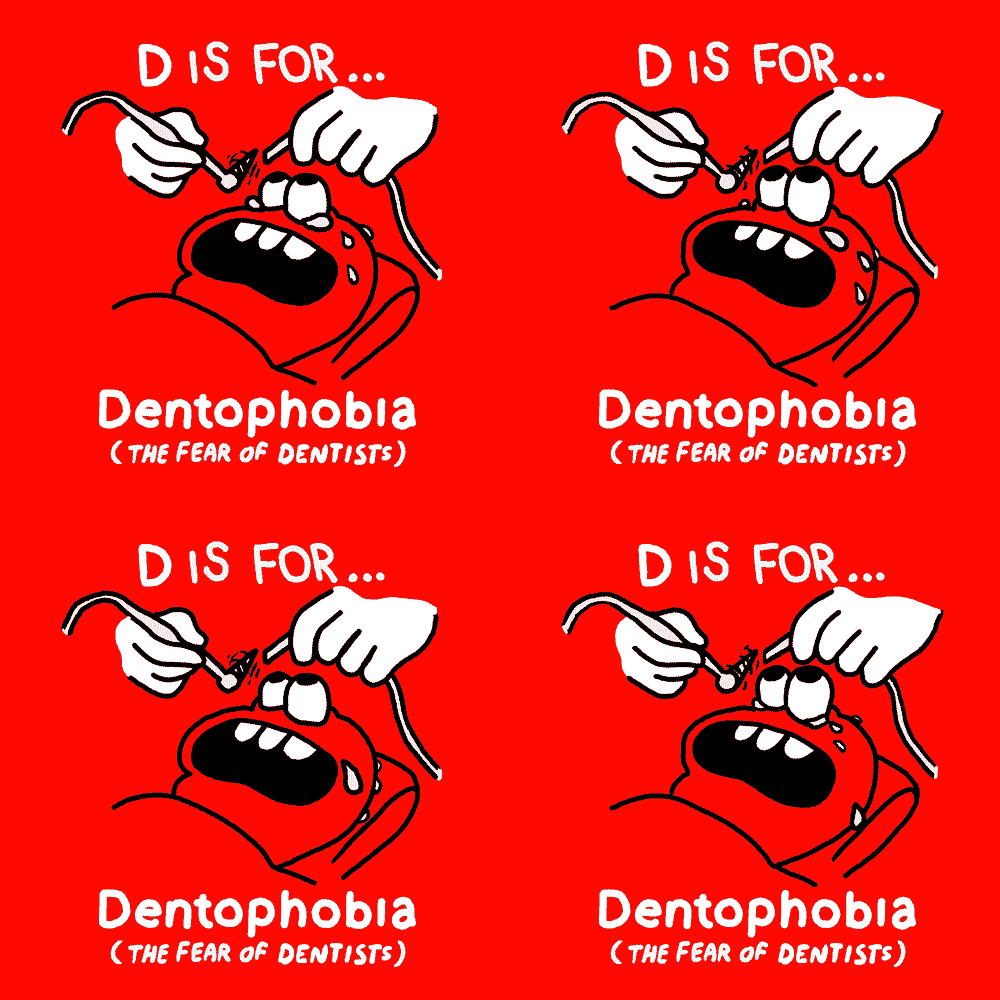
Going back to the poem “Fire and Ice”, rather than persuading the readers to pick a side, Frost wanted his audience to consider the subjectivity of their opinions. Whether it is in scorch or in shivers, whether you like it or not, there will be nothing left in the end anyways. Subjectively, your feelings and emotions make a difference on the experience that is objectively the same. Fire or ice does not matter. It is like when your dentist ask you what anesthesia you want-strawberry or banana-regardless of what you choose, you are well-aware that you would have your tooth pulled out eventually.
Diseases for Wealth: the key to unfair trade (MUST READ!!!)
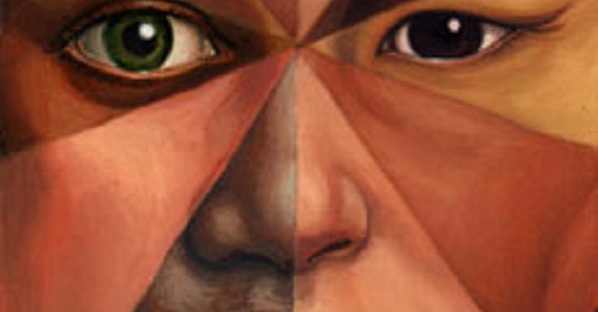
Europe's voyages of exploration succeeded in shrinking the world - not physically of course (though click here to see proof that the world may actually be getting smaller). Columbus's voyage to the Americas was especially successful in connecting the world. So, we have Columbus to thank for a day off of school, but also for the creation of an interrelated global network! Great, right?
He's beauty and he's grace... he found the United States!
|
The Columbian exchange demonstrated the first key cause of the shrinking world, the sharing and integration of resources and culture. With Columbus’s first voyage to the Americas in 1492 (he sailed the ocean blue!), contact between the two great continents was made for the first time.
Some reasons why it's good that America made a connection with Europe:
| ||||||
|
However, along with that connection came a crapload of European diseases which basically killed all of the Native Americans. (You're allowed to hate the European voyagers a little for this). The Europeans took advantage of the destruction of the native population, and paraded around the newly-discovered areas to spread their own religion and culture! Furthermore, since the entire population of people who were living in America had been wiped out, more and more foreigners from Europe and Asia began to immigrate to the "new world". These dynamic shifts of culture and population showed the first evidence of a shrinking world - the formation of a single, concentrated area where different peoples integrated into one body. (1-0 Diversity!)
In addition, the biological exchange of animals, which resulted from Columbus's voyage, succeeded in uniting the world in agriculture.
Domestic animal-based tasks, previously only isolated to Europe, became possible worldwide. (And no, I don't mean milking cows). Animals like horses, traded from the European voyagers for American crops and food, allowed national husbandry to become standardized across the globe. This unification in terms of animal resources and capabilities displayed further confirmation of a shrinking world.
Thank you to my friends...
| Mr. Cow |
| Mr. Horse |
Finally, the biological exchange of plants and food helped spread natural resources on a global level. New world crops such as American corn and sweet potatoes were spread by Western merchants to eastern Asia (ex; China), the Mediterranean, and parts of Africa. (They had yet to discover the creation of french fries and potato chips. If they had, no doubt even more potatoes would have been exchanged!)
YUMM!
|
This exchange began the process of integrating more people, labor, and resources into the new global network, which undoubtedly quickened the process of a contracting world. Honestly, what is a few diseases and deaths compared to the success that Columbus had in connecting the world? *
*THINK HARD BEFORE YOU ANSWER THAT QUESTION...
Overall, the Columbian exchange shrank the world by integrating the global people and cultures into one concentrated region and by allowing the Americas to enter international trade by way of crop/food exchange. Click here for more joyful reading about the Columbian exchange.
Farewell, dear reader. Like/subscribe/comment!!
Born and Raised Within the Pages of a Book
There's no doubt that Everything I Never Told You by Celeste Ng is a depressing and sobering novel. I mean, the book starts off with saying that this girl Lydia died. That's the most shocking beginning to any book that I've read, and her family has no clue how or why this happened. All of our questions are answered in the end, but Ng skillfully reveals her hand to us during the plot of the book because she loves to make her readers consider the bigger picture. Ng creates subplots for the characters and puts them into the main storyline to help us understand where they're coming from. I'm not going to lie, there's a lot of messed up stuff that happens in this book, but Ng tries to help everyone figure out why the characters do what they do. Instead of allowing the reader to just skim through the book without question, she wants us to truly analyze what we're reading. Characters do some bad things that shouldn't be forgivable or understandable at first glance; however, Ng adds background to these people to make them real. The characters in the book aren't one-dimension, boring objects; they're living, breathing people. For example, James is a real jerk to his son Nath for no reason, and that pissed me off at first. I thought he was just a bad guy, especially when he cheated on Marilyn, but that's beside the point. If we actually take a closer look, James was sculpted into this kind of person because of his childhood treatment. He had zero friends. None. He lived in isolation as an outcast from society, mocked because of his race. That screws up a person for sure, and it's reflected in his rocky relationship with Nath. He treats Nath poorly because he doesn't want his son to end up the same way he did, even though he sees it happening already. It's a sort of tough-love moment that's kind of understandable, but not really. Also, Marilyn can't be left out of the spotlight. She's overbearing and oppressive to her daughter Lydia. She can definitely be held responsible for Lydia's death, but the saddest thing is that she can't even control how she is. Marilyn does all these bad things to Lydia out of a deep love for her, but the true reason for her actions stems from her earlier life. She desperately wants to live out her failed dreams of becoming a doctor through Lydia, but Marilyn doesn't realize the awful damage she is causing in doing so. Ever since Marilyn married James, she always felt that she missed out on the part of her life in which she distinguishes herself from everyone else. She doesn't want that to happen to Lydia, so she puts pressure on her to follow Lydia's dreams, which are actually Marilyn's dreams in disguise. Marilyn's intentions are legitimate and heartfelt, but she goes about it in all the wrong ways. Marilyn wants the best for Lydia, but she sacrifices Lydia's life figuratively and literally to try to get her to succeed. Wait, I think I'm missing something. I'm sure that I had more to say after this. Oh, I almost forgot to mention Hannah, probably because she's so forgettable. Her quiet and shy personality grew from the fact that her family doesn't even know she exists. Marilyn forgot to set the table for her one time. How can you forget about one of your children? Her family shuns her, so she's become super sensitive to emotions, and she's freakishly good at picking up what the members of the family are actually feeling. She's also the only one to discover that Jack secretly liked Nath, which is a huge plot point! Anyway, Celeste Ng wants us to consider how the character's past experiences shaped these depressing actions that we read about. There's no comfort in what she does, but at least it makes half of the poor decisions in the novel actually understandable. I can't even imagine how this book would be if Ng left me to think through all the things the characters have done. Everything I Never Told You was a great read because all the characters are real. They weren't thought up by Celeste Ng to be good components of a novel; rather, they're born and raised in the pages of the book, and they make decisions based on how they grew up.
Monday, March 19, 2018
Reaction To Serial (99.9% of people find this article interesting!)
Hearing this podcast, this case of murder ๐ณ - a real life murder case - is astonishing, scary, and intriguing all at the same time. There are plenty of murder mystery books ๐ and podcasts out there, but the difference is that this situation is real and the people telling the story are also real. So, anything that makes the case more interesting or more complicated is not just a happy coincidence worked in by the author, it is all part of a real life situation. One can also be excited for the ups and downs that are to follow in this story, because, of course after a certain “interrogation” of a witness/key member of the trial, the falseness of the conviction of Adnan will probably seem most/less likely than it did just 2 mins. before. It's interesting also to see the thoughts of the narrator throughout the story because it really helps the listener to get into the shoes ๐ of the investigator. She goes back and forth a lot with her thought process in the way that she always has many doubts about the stories (that would help a case of innocence) that she hears, which is of course understandable, but often hard to have when he/she hears what he/she wants. Overall, it's important to listen to podcasts like these because they can open a listener up to so much more in the world ๐ that they might not otherwise ever be exposed to, for example, a Choate student probably would not be exposed to murder at their high school.
Thursday, May 4, 2017
Munching on Words
Munching on Words: Celeste Ng's Character Lydia Lee
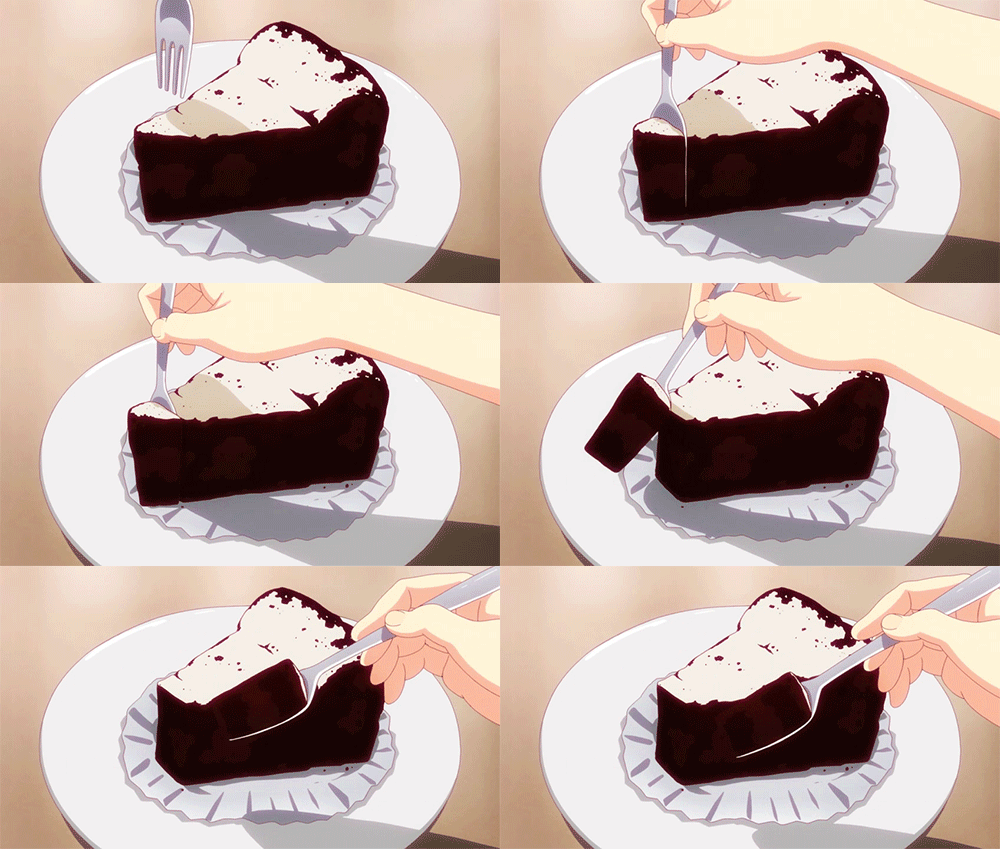
Isn’t it wonderful after a tedious at school, when go back to your house, flop onto the sofa, taking out a freshly baked piece of cake. You first admire it’s beauty, soon wrapping your tongue around a layer of cream cheese frosting tucked between the red velvet blankets. A symphony of euphoria blooms as you lie down on the couch full of satisfaction. Similarly in literature, effective writing can bring a character to life and manifest in the reader’s heart. In “Everything I Never Told You,” Celeste Ng pieces together a delectable recipe narrating an interracial family, in America in the 1970s, trying to uncover the cause of its daughter’s sudden death. Ng, as a literary baker, brings the protagonist, Lydia Lee, to life with two tablespoons of physical traits, four cups of maternal influences and ten minutes under high heat of secrets.
![]() |
| Digging that fork into that moist dense cake |
1). Add two tablespoons of Physical Characteristics.
A person’s physical characteristic hints his or her inner personality. Ng’s description of Lydia’s physical appearance is like the sugar and butter, giving the cake its delectable flavors. When Lydia’s family looked through its family album, they saw a photo of Lydia that “her eyes are like dark holes in the shiny paper.” Ng describes Lydia as gloomy, sinister and lifeless. Contrastly, in the next photo, “she looks like a model in a magazine ad, lips dark and sharp, a plate of perfectly frosted cake poised on a delicate hand.” The choice of diction, “delicate,” implies she’s fragile- needing care and attention. The facade of Lydia’s flawless, almost unnatural image, foreshadows Lydia’s lies to pretend to be the perfect daughter.
Moreover, Ng uses sensory imagery to develop Lydia as a convincing character. In Lydia’s bedroom, her mother smells “not just the powdery flowers of her perfume, or the clean scent of shampoo on her pillow- case, or the trace of cigarette smoke… she can smell Lydia herself under all those surface layers, the sour- sweet smell of her skin.” Lydia’s natural citrus aroma suggest she is a pure sweet girl; however, the layers of perfume, shampoo and cigarette smoke symbolizes her attempt to conceal her true- self because of her insecurities.
Furthermore, the physical similarities between Lydia and her mother helps the reader to understand Lydia based on the actions and thoughts of her mother. They had “the same elfish chin and high cheek- bones and left- cheek dimple, the same thin- shouldered build. Only the hair color is different, Lydia’s ink- black instead of their mother’s honey- blond.” The similarities emphasizes the strong influence the mother had, hence her mother’s past and may supply hints for the cause of Lydia’s death. Therefore, describing her physical characteristics helps the reader to visualize Lydia, giving more appeal to her “taste.” The sugar, enhances the taste of the cake, and the butter, harmonizes the other ingredients Likewise, the description of physical traits and amplifies the techniques Ng uses to characterize Lydia, giving Lydia more spice and character.
![]() |
| Addicting sugar |
Step 2: Mix with four cups of family.
“Like mother like daughter,” Lydia’s family shapes her personality from the moment she was born. Her mother, Marilyn Lee, sets the foundation of her behavior and temperament, like the flour to the cake. When Lydia was five, Marilyn left her family because of her fear of living an empty meaningless life. Marilyn saw herself in her mother as she “planned on a golden, vanilla scented life but ended up like a fly in this small and sad and empty house, this small and sad empty life, her daughter gone, no trace of herself left except these pencil marked dreams.” Marilyn was a smart student at the top of her class while breaking gender stereotypes. She imagined to be a doctor and resented her mother’s dreams of her finding a “Harvard man” and becoming a housewife.
To Marilyn’s disappointment, she became exactly who her mother wished her to be. With her deserted dreams, she pinned her expectations on Lydia since “she’s their mother’s favorite.” In Lydia’s room, “the bookshelf is so full of books that some are crammed in sideways at the top: A Brief History of Medicine, she reads upside down. Rosalind Franklin and DNA. All the books Marilyn had given her over the years to inspire her.” Pinning incredible expectations on Lydia suggests she’s an obedient girl under a lot of pressure trying to live up to it. Like the flour, Marilyn provides the structure of Lydia’s life and her mother’s suffering also inflicts on the Lydia herself, setting up a base for her unhappiness and possibly also her death.
![]() |
| Constructing the perfect recipe |
Step 3: Bake in oven at 175 degrees for 45 minutes.
Lydia’s secrets are like an oven, , Ng’s final procedure give depth to the character, giving a reason for the readers to be interested in Lydia’s story. The objective of the book is to investigate the reason of Lydia’s death, presented in the first sentence, “Lydia’s dead. But they don’t know this yet.” Despite her family sees her as a sweet daughter with good grades, loyal friends and a positive attitude, in reality she is depressed and friendless. Nath Lee, Lydia’s brother, discovers her secrets: “Once, he stayed on the phone line after Lydia picked up and heard not gossip, but his sister’s voice duly rattling off assignments- read Act I of Othello, do the odd- numbered problems in Section 5- then quiet after the hang- up click. The next day, while Lydia was curled on the window seat, phone pressed to her ear, he’d picked up the extension in the kitchen and heard only the low drone of the dial tone… If her father says, “Lydia, how’s Pam doing?” Lydia says, “Oh, she’s great, she just made the pep squad.” The contrast of expectation and reality sets Lydia as a multifaceted character. Lydia is secretive and wants to maintain her perfect image to her family. However, her parents’ oblivion to her situation discredits their knowledge of Lydia, complicating the investigation of her death.
Ng continuously introduces obstacles- in her autopsy, “it tells him that there were no intoxicants in her blood, that there were no signs of foul play or sexual trauma, but that suicide, homicide, or accident could not yet be determined.” The continuous lack of evidence sets a mysterious tone and paints Lydia’s death as abnormal and perplexing. This sets the reader a challenge that intensifies the desire of learning the cause of Lydia’s death. Therefore, just like an oven induces chemical reactions, the mysteries of Lydia uses the existing facts to give a reason for the audience to be interested.
Ta- Daaaaaaa!!!!
The way Ng brought Lydia to life by portraying her physical features, mother daughter relationship and perplexing secrets is like a dense, moist cake to the brain. Like a cake, the ingredients created a delicious dessert with flavorful taste and fluffy texture. Next time, analyze a character by comparing him or her to a delectable cake to be your own literary chef!
![]() |
| Isn't that just so visually satisfying..... |
Subscribe to:
Posts (Atom)


_2_-_Choate_Rosemary_Hall.jpg)