Thursday, April 27, 2017

Coming together to serve a purpose

In “Everything I Never Told You” Ng shows contradicting sides to an object to let the readers have a broader perspective. These elements of objects are similar to how mechanisms function. All mechanisms serve a purpose but unfortunately, have their flaws. Ideas and objects such as the lake, the Lee family dynamic, and the cookbook both serve as a benefit and as a disadvantage. People heavily depend on mechanisms to better their lives but some mechanisms have defects that cause issues. The lake, a place for play, is where Lydia’s corpse was found. The Lee family, progressive and diverse, also have their issues and secrets. The cookbook that belonged to Marilyn’s mother addresses controversial messages but still motivates Marilyn to attain her goals. Similar to any mechanism, the lake, the Lee family dynamic, and the cookbook have qualities that prove there are two dimensions to every object.


The lake is no longer a place for fun. The Lee family as convinced to buy the house near the lake when the realtor made the point, “and think of it the lake practically at your doorstep” (Ng, 104) and it would be like having a private beach. The children and the neighbors have played in the lake every summer and have made fond memories. It was a place they visited to relax and to enjoy time with the family. The lake had especially been Hannah’s favorite place as expressed, “all her life, Hannah has loved this lake” (Ng, 104); however, it would be indecent to treat it as a place for fun now. The lake is viewed differently now. After Lydia’s body was discovered in the lake, no one visits the lake to enjoy their free time. Similar to mechanisms, the lake is supposed to serve for the enjoyment and benefit for the neighbors but also have their downfalls. Ng utilizes irony to create a creepy feeling towards the lake. Even though the lake was a pleasant place where the Lees created fond memories, they now avoid it since the discovery of Lydia’s body.

The Lees have an interesting family dynamic that influences the progress of the investigation. James wants his children to fit in, because he was never able to do so. Marilyn wants her children to excel and frequently offering to sign up for extracurricular activities. Although the parents wish the best for their children, their version of the best isn’t the healthiest when they make that their main concern. They have created an atmosphere to keep your feelings private. They do this by example and by openly disregarding their children’s feelings. When Marilyn ran away from home, she wrote, “I have kept all these feelings inside me for a long time.” (Ng, 100) Even an adult of the family doesn’t know how to openly communicate. When Marilyn shared the news with James about her mother’s death, they didn’t speak about it because “he understood: they would into talk about it.” (Ng, 80) James has also disregarded Nath’s feelings when he was teased at the pool by saying, “he needs to learn to take a joke.” (Ng, 92) Even though, James understood how Nath felt, his habit of denying difficult emotions overpowered the empathy he felt for his son. It can be assumed that James and Marilyn were emotionally disconnected because James had to seek emotional support from his assistant, Louisa. On the surface, the Lees seem like a normal family; they lived together, ate together, and enjoyed the weekend together. The parents set the tone for the children to internalize their personal. Even the youngest, Hannah, is aware of this rule because she reminds herself, “don’t talk about Lydia. Don’t talk about the lake. Don’t ask questions.” (Ng, 106) The family’s bleak communication is proven when Lydia lies to her parents about her social life when she actually had no friends. It’s confirmed again when Nath doesn’t share what he knows about Jack Wolff to his parents even when he insinuates that Jack has information. The dysfunction in communication amongst the Lees becomes an obstacle in the investigation because the family doesn’t actually know anything about Lydia. Family is supposed to be a group that one feels safe and supported but the Lees were unable to create this environment.


The cookbook Marilyn’s mother lived by had different purposes for Marilyn and her mother. To Marilyn’s mother, it was a guidebook to embrace that told her how to live. The cookbook’s purpose was to provide a woman instructions on how to be the ideal, traditional woman, who puts the man’s desires before hers. The cookbook was the only thing Marilyn kept of her mother’s. Although the ideals and messages in the cookbook are flawed, Marilyn still keeps it because it was the only thing that represented her mother’s true self. Marilyn uses it as a reminder to never end up like her mother as she tells herself, “there will be more to your life than this.” (Ng, 97) She now remembers her goal to be a woman that achieves beyond society’s expectations. The book that is supposed to be a guide on how to be a traditional woman is used in the opposite way by Marilyn. Similar to how updated versions of mechanisms are made, Marilyn is the newer model of her mother. The cookbook is multipurpose because it functions differently depending on the person reading it.


The Lees never expected for such pleasant things to also have awful effects. Ng uses irony to reveal characteristics of the lake and the Lee family. Similar to a mechanism, there is an objective and purpose for something but there are also flaws. Sometimes the advantages conquer and other times the bad overpowers and causes obstacles. Ng’s writing develops as she creates contradicting feelings towards an object. Exploring the elements of the lake, the family dynamic, and the cookbook, these objects work together to allow the readers to see both dimensions of an object. On the surface, situations seem mundane; however, if you look further, the flaws are revealed and helps readers analyze the story.


The book “Everything I’ve Never Told You”, has many mechanisms. Mechanisms are groups of things that work together to allow the whole object to move. In my mind, systems and mechanism are very similar in the aspect they they work together to show other things.
 happy baby scared shocked memes GIF
The book itself is written about a system or a mechanism, or at least so far it is in my opinion. Lydia was killed, and that person that killed her is still somewhere to be found. There are a bunch of suspects and are all linked to Lydia and other suspects in their own ways. That is an example of a mechanism, people that connect with other people to figure out the main goal.

Also,  another part of the book that is actually more of a mechanism I think than a system is when the police and the family are trying to work together to figure out what has happened to Lydia. But……, Marilyn, Lydia’s mother gets very upset when the police mention suicide. She says, “ Read the paper, There are psychos everywhere these days, kidnapping people, shooting them. Raping them. What does it take for the police to start tracking them down?”
 reaction what omg shocked will smith GIF
She was being the broken piece of the mechanism at this point and nothing was going to work unless all of the pieces worked together in unison. James, Lydia’s father told her to calm down and let the police do their work.

Everything I Never Told You

Disclaimer: If you have read the book Everything I Never Told You by Celeste Ng, keep on reading. If you have not, keep on reading anyway.

In May, 1977, several police officers drag an oriental girl out of a lake in Middletown Ohio, followed by the gradual collapse of a family. A story of struggling with identity, Everything I Never Told You by Celeste Ng leads the reader through an emotional turmoil along with the Lee family when suddenly confronted by the unexplained death of Lydia Lee, their second child.
Ng alternates between different stages of the family, presenting the heartfelt helplessness of each character as well as revealing the outright racism at that time. As Lydia’s death sounds the alarm, Marilyn and James will soon discover the underlying fractures within the family. Their intricate relationships with each other (and with Lydia) construct a system––an extremely fragile one.
A system in general includes several interdependent mechanisms made up by different elements. With this specific story, the characters serve as the elements that create relationships, the mechanisms inside a system. In a system, the malfunction of one element causes the mechanisms and, eventually, the whole system to collapse, just as how Lydia’s lies and later, death, break all other elements apart and weakens the character’s relationship with each other.
Despite her title as “the favourite,” Lydia constantly pushes her siblings and parents away, loosening all ties with her family. She presents to her family a carefully crafted image of herself, one that confirms her parents’ perfect perception of her. To conceal her loneliness, Lydia spends hours sitting on the window seat with the phone in her lap, pretending to share gossip with her “friends,” only to be greeted with the echo of her own voice or the “low drone of the dial tone.” She talks, or lies, about those “friends” with a “stillness” on her face so undoubtable that not even her parents suspect. The countless times when Lydia asks to hang out with her friends, James permits with a ten-dollar bill and without further inquiry.
When Marilyn searches through Lydia’s backpack, she immediately rejects the idea of “her Lydia” doing anything like that: “My Lydia would never...” As Marilyn digs closer to the truth, Lydia’s “[wavered]” image will be completely shattered.
Indeed, “so fussed over, so carefully tended,” Lydia is the “prize flower” to Marilyn and James; however, she clearly views her relationship with her parents as unworthy of the truth, as she chooses Jack, a complete player stranger who “ran wild,” over her parents.
Soon, as Lydia disappears from their lives, James and Marilyn will find their relationship rapidly deteriorating. For the couple, their children serve as both an adhesive––to keep the family together––and a major source of conflict, not to mention the inherent differences in their ideals: one who stands out wants to blend in while the other who blends in perfectly craves to stand out.
Marilyn’s children represent everything she has accomplished. They carry the weight of everything that she has given up for James: her degree, her youth, her goals, and her future as a respected professional “striding across the hospital waiting room.” For the sake of her family, she has ended up like her mother, someone she despises. Her self-perceived value crumbles as Lydia is found dead, erasing every single sacrifice she made for her daughter along the way for sixteen years.
As frustration develops into “fury,” she vents her dissatisfaction toward James in the most painful way and attacks his identity, blaming him for “[kowtowing].” “The word rifles from his wife’s mouth and lodges deep in his chest.” James has always thought of Marilyn as someone special, someone who fully accepts his differences, but her harsh comment proves otherwise. This word “kowtow” forces him to face his deepest insecurity: his race. By doing so, Marilyn has created a irrevocable rift in her relationship with James.
Moreover, considering the gravity of her daughter’s death, Marilyn’s anger will continue to fall on James, along with the pressure of protecting the family. As a human being, James needs a haven for his mind to “[go] blissfully blank.” When he can no longer seek comfort from Marilyn, he spontaneously approaches someone else who can provide him “a dreamless sleep”; in this case, Louisa is the new element replacing Marilyn. As long as Marilyn’s wound is unhealed, her anger will aggravate the existing estrangement with her husband, impairing their relationship and consequently, the system of their family.
Although the analogy of a system and the Lee’s appears inappropriate and abrupt, their relation can be proven gradually, starting from an element’s malfunction. Hopefully, the new element does not permanently take the position of an indirectly affected element, as costs always exist in replacements; and the mechanism will soon adapt to operating without the faulted element by learning to rely on and cooperate with each other. (That basically means hopefully, everything will be fine).

Bake the Famous Racism Cake

Recipe: 1 ostracized Asian American Family
Prep Time: 2 generations
Ingredients: 1 Son of Chinese Immigrants, 1 Daughter from the Old South, 3 Mixed Race Asian American Children, 1 majority white Ohio town, 2 unhelpful police officers, 2 pinches of racism

Step 1: Prepare the Family
  1. Relocate a young Chinese-American child from Chinatown in San Francisco to a town in Middle America in order to create a lifelong feeling of not belonging.  
  2. Create a Southern Belle named Marilyn who refuses to stay within the guidelines of a Virginia woman.   
  3. Introduced Chinese-American named James to Marilyn. Have them fall in love.
  4. Create a baby from James and Marilyn that Marilyn’s parents will not support.
  5. Move the new family to Ohio, in a town where there are no other Orientals.

Step 2: Create the town
  1. Mold a small Ohio town out of the farmland.
  2. Place only White Christian families in this town.
  3. Create a culture of intolerance and distrust of people who are different than the majority of the town.
  4. Pass this culture down through the generations of the town.

Step 3: Bake the Racism Cake
  1. Place the family created in Step 1 to the town created in Step 2.
  2. Enroll the three kids in school in the town but do not allow them to integrate themselves into the social circles because of the color of their skin.
  3. Separate James from his co workers because they look at him as some sort of attraction.
  4. Formulate a situation in which oldest daughter Lydia dies a suspicious death.
  5. Allow for the situation to age and the ingrained racism of the town to escape into daylight.
  6. The heat created from the tension between the family and the town will bake the cake.

Step 4: Enjoy

    f890848bc90c810edbe7b7f2c1c07b07.jpg

Systems of Celeste: Isolation, Parenting, and Gender Roles


Ng is sort of like a literary engineer.

In her novel Everything I Never Told You, she used various events and characters to build and design an intricate system of ideas. Ng’s exploration of racial isolation and struggles, familial and parenting conflicts, as well as gender roles all act like systems. They're made up of a bunch of smaller points in her story, and work together to form larger ideas.

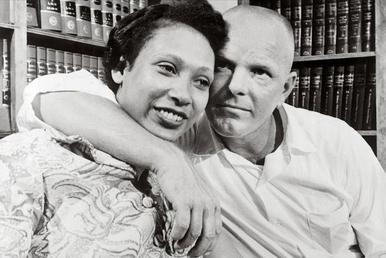
Struggles with racial tensions and isolation are commonly seen throughout the beginning of the novel, especially in James’s childhood and marriage. He learned to be ashamed of his identity, and it became a factor that isolated him. “The first morning, James slid into his seat and the girl next to him asked, ‘What’s wrong with your eyes?’ It wasn’t until he heard the horror in the teacher’s voice---’Shirley Byron!’---that he realized he was supposed to be embarrassed; the next time it happened, he had learned his lesson and turned red right away.” (Ng 43). In his marriage with Marilyn, he felt incredibly lucky to gain the opportunity to blend in. “It was as if America herself was taking him in. It was too much luck.” (Ng 45). Even still, he and Marilyn dealt with issues concerning their interracial marriage. Marilyn's mother held the popular opinion that interracial relationships were unnatural and not okay. “‘Think about your children,’ she said. ‘Where will you live? You won’t fit in anywhere. You’ll be sorry for the rest of your life.’” (Ng 54) Ng mentions the Loving v. Virginia case, which was a huge landmark in the civil rights movement. “Just days before, hundreds of miles away, another couple had married, too---a white man, a black woman, who would share a most appropriate name: Loving. In four months they would be arrested in Virginia, the law reminding them that Almighty God had never intended white, black ,yellow, and red to mix, that there should be no mongrel citizens, no obliteration of racial pride.” (Ng 55) 

Ng uses all of these events in the story and pieces from her characters to develop the system of racial inequality.
Ng also introduces a system concerning parenting and family relationships. James desperately attempts to live through his son, Nath, by pushing him to become a more successful version of himself. “Although James himself had been a swimmer in high school, he had never won a trophy… Now he suspected that Nath had the makings of a swimmer, too… In high school, James imagined, Nath would be the start of the team, the collector of trophies, the anchorman in the relay.” (Ng 88) James wasn't a successful swimmer, often separated from his teammates. He hoped Nath would become what he couldn't, a way of compensating for his own lack of success. Nath is, in fact, very similar to James. They both are isolated from the other children, shy and reluctant, and were by no means popular. “James, not attuned to the sensitivities of the playground, was suddenly annoyed at his son’s shyness, his reluctance. The confident young man in his imagination dwindled to a nervous little boy: skinny, small, hunched so deeply that his chest was concave. And though he would not admit it, Nath---legs twisted, stacking the toes of one foot atop the other---reminded him of himself at that age.” (Ng 88)

James wants his son to be successful and to prevent him from dealing with the struggles he faced as a child. During his son’s game of Marco Polo with the other children in the pool, the other kids all crawled and sat on the edge. James hoped it was simply because they were tired, or they were just playing, but his racial difference was a major factor. “Nothing to do with Nath. Then an older girl---maybe ten or eleven---shouted, ‘Chink can’t find China!’ and the other children laughed. A rock formed and sank in James’s belly.” (Ng 90) James and Nath’s day at the pool pushed James to the realization that his son wouldn’t be bringing home trophies or be popular in school. James himself was taunted and teased in his childhood, and his resolution when Nath faced the same difficulty was to try to make his son perceive it as a joke, something normal. “So part of him wanted to tell Nath that he knew: what it was like to be teased, what it was like to never fit in. The other part of him wanted to shake his son, to slap him. To shape him into something different.” (Ng 92)
James and Nath’s relationship is very similar to that of Marilyn and her own mother. Marilyn’s mother desperately hopes for Marilyn to successfully do what she had not. She wished for Marilyn to marry a man and stay with him, become a successful housewife, and embody the ideal, Betty Crocker-esque family. “She thought with sharp and painful pity of her mother, who had planned on a golden, vanilla-scented life but ended up alone, trapped like a fly in this small and sad and empty house, this small and sad and empty life, her daughter gone, no trace of herself left except these pencil-marked dreams.” (Ng 83) Marilyn’s mother was never able to attain her goal, and sought for Marilyn to have what she so desperately wanted.

Marilyn’s mother pressed for Marilyn to become the perfect housewife, and her upbringing clearly introduced the system of gender roles that Ng develops. Marilyn struggles with her want to have a career, but she feels limited by her role as a mother. “She could go back to school now, at last, and finish her degree. Do everything she’d planned before the children came along. Only now she couldn’t remember how to write a paper, how to take notes; it seemed as vague and hazy as something she had done in a dream. How could she study when dinner needed cooking, when Nath needed to be tucked in, when Lydia wanted to play?” (Ng 77) Marilyn felt she was unable to simultaneously do both. Being a mother while pursuing a professional career didn't seem possible at the time, and even today it is difficult. 

Rather than try to be both, Marilyn just decided to disappear to attend university. “In the end she tore up the note and tossed the shreds into the wastepaper basket. Better, she decided, just to go. To disappear from their lives as if she had never been there.” (Ng 100) The family never talked about the temporary disappearance of Marilyn, which only made her desire for an education seem worse. “For as long as she’s been alive, the family has never spoken of it…” (Ng 102) Ng develops concepts of masculinity and femininity through the dynamic of James and Marilyn’s career choices and household obligations. James himself feels pressure to live up to the image of an ideal husband. When confronted with the possibility of his wife wanting to pursue a career, “James was less enthusiastic. He knew what people would say: He couldn’t make enough---his wife had to hire herself out.” (Ng 79) His idea of masculinity demands that he provide for his family financially, yet allow for Marilyn to tend to more domestic aspects of their household. “At home, James did not know how to make eggs behave in any way. Each morning, he served the children cereal for breakfast and sent them to school with thirty cents apiece for the lunch line.” (Ng 87) James has never been exposed to domestic housework such as cooking or cleaning, as societal gender roles placed that obligation onto Marilyn. 


Ng's development of all these different ideas that cycle through the novel are like literary systems. They are all made of smaller parts that accumulate and work together to form a more complex whole.

Master Chef: Literature Edition


Recipes don't always have to do with cooking. In a general sense they are types of formulas, in which multiple factors lead to a particular outcome. However, the majority of people probably don't think of this definition when they hear the word "recipe." Typically, recipes consist of three main components, ingredients, directions, and a delicious end product. Each of these components play important roles in bringing satisfaction to the person eating this product. The ingredients make up the foundation of recipes, as they provide the flavors and substance needed in tasty food. While these ingredients may be tasty on their own, they need a set of directions to unify them to make the final product. Finally, this final product can take many forms, whether it be a dessert, entree, or appetizer. Each of these forms have their own unique effect on the diner’s experience. Similarly, Celeste Ng uses a variety of recipes in her fictional novel Everything I Never Told You to create characters, setting, and story plots.
Each character in Ng’s novel is made up of multiple unique ingredients, as seen in the creation of Jack Wolff and Marilyn. Ng uses Nathan’s experiences with Jack as ingredients to create his wild, irresponsible, and shady character. Nath reveals how Jack is known for taking the virginity of girls at his high school, and he is constantly considering Jack as a suspect in Lydia’s death. Ng’s description of Nathan’s experience at the Y with Jack, where Jack taunts Nath in the pool after playing a racist joke on him, shows Jack’s racism as well. Also, as Nath thinks about whether or not to tell his parents about Lydia’s relationship with Jack, he thinks, “All the neighbors had whispered about it when the Wolffs had moved in, how Janet Wolff was divorced, how Jack ran wild while she worked late shifts at the hospital.”(Ng 16) Ng presents all of these ingredients with the directions for the recipe being to empathize with Nath, a seemingly perfect child, to solidify this indecent image of Jack. On the other hand, the majority of Marilyn’s character is created through her past. This past filled with her dreams and desires, her defiance of her mother, and her relationship with James make up the three main ingredients to her character. From her past desires, it’s seen that she’s driven, wanting more than what the stereotypical housewife life would provide. This carries over into her defiance of her mother, which depicts her unhappiness in the housewife life she got stuck in. Lastly, her relationship with James reveals her impulsive nature, as Ng writes, “When she’d kissed him, she’d surprised herself. It had been such an impulse,” (Ng 36) after Marilyn kissed James for the first time. These ingredients are added chronologically in varying amounts to produce Marilyn’s character. Ng uses similar recipes throughout Everything I Never Told You to create a distinct setting as well.
Even though Ng reveals the setting of the story in the first few pages, May 1977 in Middlewood, Ohio, she uses ingredients surrounding racism, sexism, and cultural stigmas to add context to it. Nathan’s experience playing Marco Polo at the Y when a little girl shouts “Chink can’t find China.”(Ng 90) as a taunt directed towards Nath, along with James’s past of being the only non-white kid in his school, show the difference in racial tolerance between today’s society, and the US in 1977. To illustrate the inequality between men and women at the time, Ng uses the ingredients of Marilyn’s struggle to become a doctor along with her mom’s influence on her to be a housewife. The final ingredient to this setting is the description of people's reactions to the Wolff family moving into town. The fact that Mrs. Wolff was divorced seemed to be the most fascinating thing about the family, as was noted earlier “All the neighbors had whispered about it when the Wolffs had moved in, how Janet Wolff was divorced.”(Ng 16) Ng paints a picture of how unaccepted and uncommon divorces were at the time. Ng blends this setting and the characters she created to cook up the juicy mystery of the story.
The majority of the mystery surrounding Lydia’s death is made up of characters such as Jack Wolff and the policemen, and their actions. As said before, Nathan suspects Jack Wolff of being involved in Lydia’s death, and Jack’s reputation supports Nathan’s claim. However, an opposing ingredient, the policemen, are happy with concluding that Lydia killed herself. To support the police’s claim, Ng once again uses Nathan’s thoughts as an ingredient, this time depicting Lydia’s lonely and depressing life. Nath’s thoughts of “the strangeness of her family. A family with no friends, a family of misfits.”(Ng 112) when trying to find reasons for why the police won’t investigate Jack thoroughly reference his family's ethnicity. It also implies that just because his family is different in terms of race, it would be easier to deem suicide as the cause of Lydia’s death in the eyes of a racist. Along with this mystery, the novel supports a side dish of a plot focused on Marilyn’s struggle against sexism, made mostly from the ingredients of Marilyn’s character and setting. The influence of Marilyn’s mom, blended with the sexism present in the setting is a recipe for great hardships that Marilyn must overcome throughout the story.

One cup of characters, three ounces of setting, and a pinch of mystery. Blend till slightly chunky and bake at 1000 degrees for 20 minutes. This recipe, along with the many micro recipes Ng uses throughout Everything I Never Told You, allow her to effectively create an intense and mysterious plot, along with interesting characters, and setting.


Celeste Ng: A Literary Chemist

In real life, you don’t need a fairy godmother to change an ordinary pumpkin into Cinderella’s carriage. In fact, you can do it yourself--maybe not in one step, but multiple steps. Grind the pumpkin, heat the pumpkin pieces to their melting point, mix them with metal, and consolidate them in the shape of a carriage.


Almost everything in the world is made through a series of simple steps. The microscopic world is no exception. Most chemical reactions, like the iodine clock reaction, occur in a series of elementary steps that all together form a reaction mechanism. This also applies to Celeste Ng’s novel Everything I Never Told You. As a reaction mechanism requires all its elementary steps to be present, the correct type of reactants, and often the presence of a catalyst, Ng shows that the Lee family needs every member to be present to maintain family order and happiness, that hurtful remarks, however trivial, can pile up to transform lives, and that the plot progresses through her timely inclusion of plot events.

So to the first parallel: just as a chemical reaction fails to proceed when any one of its elementary steps is missing in the reaction mechanism, the Lee family falls apart whenever a family member is absent.


Say you wanted to make an iodine clock reaction. If you don’t have the first step, you won’t get the second step. Without the first and second step, the reaction mechanism is incomplete. Take a look at how the family reacts after Lydia dies. All members of the family, Marilyn and James especially, become less empathetic. When Nath picks a fight with Jack at Lydia’s funeral, James is not able to console Nath. Why? James has to “keep his own face from crumpling” (Ng 64). According to Hannah, James and Marilyn also fight for the first time (Ng 115). Marilyn’s upset about James’s passive compliance to the police, so without even thinking, she blurts out the word “kowtow” (Ng 116), hurting James and evoking within him hundreds of hurtful childhood memories. James, as a result, goes to Louisa. See how messed up James and Marilyn’s relationship becomes?

With Marilyn absent, the family members also behave similarly. When Marilyn leaves home on receiving news of her mother’s death, James, Nathan, and Lydia rely on instant breakfasts for over a week. James also puts in extra effort to design a fun event for the family. Notice how unhappy the family becomes, how crucial it is for every family member to be present, just as a reaction mechanism needs all its elementary steps and reagents in order to function and yield the desired products.

Now to the second parallel: as even the slightest errors in a reaction mechanism could yield undesirable effects, the seemingly trivial racist and sexist remarks targeting James and Marilyn leave a permanent mark of disgrace in their lives.


Combusting propane, a common ingredient of natural gas, would yield carbon monoxide, not carbon dioxide, if propane were to react with a limited amount of oxygen, not an excess. If HCl, a strong acid, were replaced by its conjugate base, Cl-, in a reaction with NaOH, the reaction would not even proceed. Just as the presence of one hydrogen atom or amount of reactants matter, small but hurtful events in James and Marilyn’s childhood accumulate and shape their personalities. As the only Asian American at Lloyd High School, James grows up detesting his difference. In his twelve years at Lloyd, he “never [at once] felt at home” (44). An outlier even as a capable professor, James is rejected by Harvard simply because of his race--because he “wasn’t the right fit for the department” (50). Marilyn’s mother disapproves of Marilyn and James’s marriage only because of James’s race. Although James seems unaffected by these events the moment they occur, his desire to blend into society gradually accumulates, evident in his way of raising Nath. When Nath goes to the swimming pool, James forces him to join the kids playing Marco Polo so that Nath can “learn how to make friends” (Ng 89), trying to implement his ideals of a “confident young man” (Ng 88) into Nath’s life. The word “kowtow” (Ng 116) also brings to James’s mind the little racist remarks and actions in his childhood and adulthood, such as those aforementioned.

This is also the case for Marilyn. Like James, Marilyn lets her mother drill her mother’s perception of happiness into her own life--to marry a “wonderful Harvard man” (Ng 30)--during her childhood. It is only few years into her young adulthood at her wedding that Marilyn openly defies her mother’s authority and beliefs. Despite her mother’s plea that she reconsider her marriage with James, Marilyn persists in the interracial marriage, an act considered unconventional in her society. Ng shows how these events, however trivial they may be at first, have the power to influence a character’s decisions and actions.  

And finally, to the last parallel: as a catalyst increases the overall rate of the reaction mechanism by increasing the rate of the slowest elementary step, Ng incorporates significant plot events at the appropriate time to make the story progress. If the catalyst, hydrogen peroxide, were not present in the iodine clock reaction, the reaction would occur extremely slowly or might not even proceed.

Celeste Ng similarly includes major events that act like catalysts in certain chapters. Ng writes about Marilyn’s discovery of Marlboros and condoms in the fifth chapter to show Marilyn’s change of perspective on Lydia’s death. Prior to the discovery, Marilyn only mourns, refusing to consider the possibility that her daughter may have committed suicide. Upon the discovery, she says to herself that “she will find out everything she doesn’t know” (Ng 120), and that “she will keep on searching until she understands how this could have happened” (Ng 120). Marilyn, whom Ng portrays as headstrong in the first four chapters, is now depicted as a mother determined to verify the truth of her daughter’s death.

Another example of Ng’s literary “catalyst” is her way of developing James and Louisa’s relationship. Ng does hint at their potential sexual relationship when first introducing them into the story, but the next time Ng mentions them, she jumps right into sexual stuff. In my opinion, this is the most significant jump made so far in the novel--only within the span of two chapters!  

In summary, Ng’s emphasis on the importance of every family member, the dangers of trivial but many hurtful words, and the timely addition of important plot events in Everything I Never Told You parallel some core attributes of reaction mechanisms: the presence of all elementary steps, the qualitative and quantitative accuracies of every reactant, and the presence of a catalyst.

Read more about reaction mechanisms--what they are and how they work.

Celeste's Systems


  Everything I Never Told You by Celeste Ng is a fiction book about an Asian-European family that loses a daughter after she drowns in a lake. After the daughter’s death, the family begins to learn things about one another that they had never known before. In this book, Celeste Ng uses various systems amongst the Characters, the Plot, and the Setting. The systems that are used create a more complex and dynamic story when they are put together. 


The elements of setting in the book are used together to make Everything I Never Told You more sophisticated. Celeste Ng uses a specific time, place, season, and year in the story to give more context and understanding to the reader. For example, the second line of the book says that the year is 1977, six thirty in the morning, and it is May 3. When looking at these things separately they have little meaning, but when they are put together their meaning is much more dynamic and complex. At the time which the story was taking place there was lots of racial tension and violence. The month and time that is provided also allows the reader the picture a spring morning with the sun rising. Like many other Authors, Celeste Ng uses the various elements of settings in the book to create a complex system.

Celeste Ng creates various relationships and connections amongst the characters in the book to make it more more layered and complex. In this book the main characters are mostly from the Lee family. Lydia Lee, who died after drowning in a lake, is the daughter of James and Marilyn and the sibling of Hannah and Nathan. Throughout the story the author builds on the relationships that the Lee family has with each other and with the other characters. An example of this is the Lee's feelings towards Jack Wolff. Jack is a neighborhood boy who had become close friends with Lydia before her passing. At Lydia's funeral, Nathan aggressively confronts Jack because he thinks that he has something to do with Lydia's death. Hannah holds Nathan back because she thinks of Jack as a friend. Celeste Ng uses these two relationships that Nathan and Hannah have with Jack to make a conflicting and complicated story.

Celeste Ng orders the events that take place in the story in a specific way to create complexity and clarification in the story. In Everything I Never Told You the story line constantly switches from the past to the present to make the story have more context and meaning to it. The present time in this story starts in Chapter one which are some of the first things that take place after Lydia's death. The past time is all of the events that take place before Lydia's death. Celeste Ng often switches from the present to past to give a character thoughts more context. For example, when James Lee first met Marilyn in Chapter two he describes how he felt that he had never belonged in the world. Immediately after that the author switches to the story of James's childhood. Celeste Ng orders the events in a specific way to give more clarification and meaning to the story.

The idea of a system can be interpreted different ways in life and literature. Systems in literature are things that work together to make a complex whole. This can be things like events, characters, setting, and many other elements of a story. It is important that readers are able to identify the things that authors purposley use to give their stories more meaning, context, and complexity.


A Silver Necklace or A Silver Stethoscope

“A stethoscope looped around her neck like a shining silver necklace” (Ng 95).
(http://bestanimations.com/Money/Gems/Gems.html)

The quote above is from Celeste Ng’s novel Everything I Never Told You and highlights the system of gender roles. Systems are underlying themes in the novel that many plot events are connected to. In the novel, the system of embracing or opposing conventional gender roles is apparent. Marilyn, a young woman, dislikes gender roles while James, Marilyn’s young husband, embraces gender roles. Marilyn’s and James’s upbringing and experiences with gender roles influence their present, adult notions of gender roles. 


As a child, James witnessed his mother defy gender roles and work to help her family make ends meet. James remembers, “his mother rising early each morning […] massage oil into her calloused hand, trying to soften them, and his father would leave the room, ashamed” (Ng 79). James learned from his father’s shameful reaction that supporting the family is the man's job, not the woman's. James refuses Marilyn’s request to work because he wants to conform to gender roles and does not want other people to think that, “he couldn’t make enough — his wife had to hire herself out,” (Ng 79) similar to what people thought of his father. 


On the contrary, Marilyn’s mother is a home economics teacher who often resembles a real version of Betty Crocker. Marilyn’s mother wants Marilyn to grow up to be the perfect housewife: sporting pearls, baking cakes, and sewing clothes. However, Marilyn wants to break gender roles and take part in more masculine classes like wood working than home economics. When Marilyn tries to switch into wood working, she is refused because she would, “be very distracting to the boys in the class” (Ng 27). The men who study alongside Marilyn in a college level laboratory always try to help her because they think that she is incapable of performing the same tasks men perform. The people who believe that Marilyn is better off in the kitchen rather than in the lab are the people whose attitudes push Marilyn to break gender roles to show that women are just as capable as men. 

Everything I Never Told You exemplifies how men are more comfortable to accept gender norms because men are not oppressed from certain careers. Nowadays, women advocate to break gender roles because women are discouraged from pursuing professions that are considered too “masculine”. Past experiences with gender roles effect one’s feelings towards them. While some women are content with a sterling silver necklace around her neck, other women dream of a stethoscope around her neck as a similar symbol of success and accomplishment

For a more in depth discussion about gender roles, watch this Ted Talk by a fifteen year old girl: https://www.youtube.com/watch?v=_R_JX0qRV-w