Monday, May 23, 2016

The Importance Of Human Emotion


In Sherman Alexie’s Flight, the main character Zits goes through similar struggles to that of the main character Riley from the movie Inside Out. In Flight, Zits travels through multiple bodies and time period; each period teaching him something about himself. In Inside Out, after moving to San Francisco, Riley struggles to acclimate herself and copes with this by withdrawing from her surroundings. We witness Riley’s emotions, led by the emotion Joy, try to keep her happy; but ultimately fail to do so until they allow Riley to feel sadness. During these hard periods both Riley and Zits start the question their life. Each struggles with finding a meaning or purpose in their life. As they both question themselves, they each fall into a period of not caring about themselves or the people surrounding them. At the end of the novel both Riley and Zits overcome this and find happiness within their lives. By not neglecting their self worth and the self worth of others, Zits and Riley were able to develop and mature into better individuals.
In Inside Out, Riley stopped talking to her parents about her days at school and hockey, her favorite sport. This happened at dinner after Riley had lost her personality. Riley’s mom told her about a hockey league she found in San Francisco and Riley responded in a sarcastic disappointed tone “Oh yeah. That sounds fantastic,” (Inside Out, 27:30). As time went on Riley continued to try to withdraw because the characters controlling her emotions continued to act like everything was fine. This type of withdrawal continued until Riley decided she wanted to run away from home. In Flight, Zits learned to withdraw at a young age because of his mother’s boyfriend’s abuse. “I learned how to stop crying. I learned how to hide inside of myself. I learned how to be somebody else. I learned how to be cold and numb,” (Alexie, 234). In both of these situations Riley and Zits could have avoided pain if they were able to submit to nihilism and reject their negative emotions towards moving and abuse. The long-term effects of submitting to nihilism; however, would have caused for Riley and Zits to be incapable of enjoying life and appreciating their families. Because Riley and Zits later found happiness, the inability to submit to nihilism allowed them both to feel joy later in life.
In the beginning of Flight, Zits is an orphan and does not have anyone to protect him. These circumstances cause Zits to question the meaning of his life and believe that he is a burden. When Zits is about to shoot inside the bank a man look at him and says, “You’re not real,” (Alexie, 59). This strikes Zits and causes him to consider his beliefs on absurdism. This reoccurs throughout the text and through his time travel Zits realizes that every life has meaning, including his. Though Zits considers absurdism more that Riley, Riley similarly comes to the conclusion that her life also has meaning. Unlike Flight, where Zits finds his meaning through seeing his self worth to other people, Riley finds this meaning within herself. In Inside Out when Sadness removes the light bulb from the control board, she also changes Riley’s mind (Inside Out, 1:19:50). This becomes a defining moment when Riley’s emotions realize that Riley cannot be herself without all of her feelings. This realizations lead Riley to return home where she see how much she means to her parents. After realizing her parents searched for her all afternoon, Riley realizes how much she means to them. Her parent’s love causes Riley to see that she matters and has meaning. Both of these instances are proof that Riley and Zits both do not believe in absurdism and know that their lives have meaning.
Inside Out focuses largely on Riley’s emotional development and explores the importance of each human emotion. Because of this, unlike Flight Inside Out does not examine existentialism. At the end of Flight, Zits comes to the realization that he determines his actions and how outside forces affect his life.  The moment where Zits realizes that, not only is he responsible for his actions and ways of life, but also that he needs to seek outside help to fix them is a turning point in Zits’s life. After confessing all of his childhood hardships Zits says, “But I am tired of hurting people. I am tired of being hurt. I need help,” (Alexie, 235). This realization that he needs to take responsibility for helping himself and bettering his life causes Zits to go the police and hand in his guns. After Zits turns in his guns readers witness that Zits is truly a good child and never intended to cause any harm. While the police question Zits about the bank security tape Zits is asked about a mother and her son and refers them as “beautiful,” (Alexie, 242). This shows that underneath all of the hardship and abuse Zits had gone through he was a good, moral, person; and, after taking responsibility for himself Zits is able to see this as well. Without Zits’s realization that he was responsible for himself, Zits would have been unable to build a life for himself and gain a family.
In our life, the majority of us struggle to find a purpose in our life. In trying to do so we often turn to ideologies like absurdism and nihilism; however, these ideologies can often lead to neglecting your own well being. For this reason it is important to find a purpose in life, as well as, finding something invokes happiness. The majority of human growth comes while questioning our own meaning and purpose, and similarly, to Flight and Inside Out this questioning can often drag people into deep sadness or feelings of numbness. Beyond all of this questioning, it is vital to human existence and well being to remain optimistic and hopeful. Without this optimism both Zits and Riley would have been unable to grow into better individuals.

Sunday, May 22, 2016

Finding the Meaning of Life Through Music, A Murderer, and A Confused Foster Child

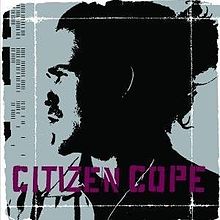
Life is a constant journey: a scavenger hunt to find its purpose. Through different philosophies, everyone’s on a mission. Whether you are constantly searching for an unseen purpose, have created your own purpose, or live with no purpose at all; you each go on with life in similar ways, despite the ups and downs. In The Stranger by Albert Camus, the main character, Meursault, embodies a life outlook on the basis of absurdism. He has seemingly given up on finding his purpose in life, but continues to survive and push forward, even on his worst days. In Flight by Sherman Alexie, Zits lives more of an existential lifestyle. He travels on a journey through time and multiple bodies, looking his path in life and learning many lessons along the way. Similarly, “Let the Drummer Kick,” a song by Citizen Cope, explores an existential idea by listing the major points of the journey through a relationship. “Let the Drummer Kick” by Citizen Cope depicts concepts similar to those of Flight and The Stranger through its simple language, philosophy on life, and message.
Language choice and writing technique in a piece of literature share a lot of information about the style and message of one’s writing. The writing style of The Stranger is very unique. Initially written in French, Camus writes using only the simple past tense. Even when translated, the style shines through to reveal important aspects of Meursault’s personality in the story. Meursault often shares personal events by simply listing them as a chain of events, such as, “I caught the streetcar to go to the public beach down at the harbor. Once there, I dove into the channel. There were lots of young people.” (Camus 48) This simple writing style supports Meursault’s static character traits, as a rather insouciant individual. Likewise, “Let The Drummer Kick,” conveys an important message with clarity and concision. Many of the topics discussed in the song are sung in a list format. In a very straightforward manner, Citizen Cope sings, “Incarceration. Determination. Equation. Humiliation.” (Greenwood, “Let The Drummer Kick”) Although blunt at some points, this songwriting technique supports the message of the song and shares the highs and lows of a relationship, which Citizen Cope considers to be a monumental journey. Both Meursault and Citizen Cope share important life missions in a straight-forward way that clearly conveys their messages.
51PfkuTe+HL._SY344_BO1,204,203,200_.jpgThe message of “Let The Drummer Kick” is similar to Flight, as both travel on a journey filled with life lessons that the narrators carry with them for the rest of their lives. “Let The Drummer Kick” shares the story of the narrator learning important values through the main aspects of a relationship, such as “identification” and “inspiration.”(Greenwood, “Let The Drummer Kick”)  At the end of the song, Citizen Cope sings, “You don’t even have to wait. You don’t even have to wait.”(Greenwood, “Let The Drummer Kick”) These lines emphasize the message that the narrator is trying to convey - follow your heart (as a result of the lessons learned above). In the same way, Flight by Sherman Alexie shares Zits’s journey to find his duty in life, as he learns that his rebellious behavior may serve as his downfall if he does not change his ways. Towards the end of the story, Zits reflects on his self-discovery, saying, “I learned a valuable lesson. But I don’t know what that lesson is. It’s too complicated, too strange… Maybe you’re not supposed to kill. No matter who tells you to do it. No matter how good or bad the reason. Maybe you’re supposed to believe that all life is sacred.” (Alexie 243) Although the journey for both Citizen Cope and Zits may be long, their outcomes are similar in how they see the world around them and their perspectives on life.


Both Flight and “Let The Drummer Kick” are centered around the philosophy that while life is difficult, there’s a hidden purpose that one must constantly search for. This existential outlook can be seen in how Zits begins to perceive the world around him after being taken in by Officer Dave’s family. He quickly realizes that he has the right to live by his own terms and become a better person, exemplified when Alexie writes, “I am tired of hurting people. I am tired of being hurt.” (Alexie 242) Existentialism is defined as a philosophical understanding “that stresses the individual's unique position as a self-determining agent responsible for the authenticity of his or her choices.” (www.dictionary.com) Quite opposite to nihilist views, Zits begins to find purpose for himself towards the end of the novella. Equally, “Let The Drummer Kick,” stresses the importance of pushing forward despite difficulties one may encounter. In the second verse, Citizen Cope provides more of an explanation for each noun used in the first verb. He touches on “determination,” and identifies “inspiration” as “what pulls you through.” (Greenwood, “Let The Drummer Kick”) Both of these notions highlight the theme of the song and its existential view on life. On the other hand, Meursault, in The Stranger, shares more of an absurdist outlook on life. When he is imprisoned, he refuses to listen to others and see the Chaplain, instead accepting his death and making no attempt to change his future. This carefree nature of Meursault’s clearly embodies a lifestyle centered around absurdism, as he gives up on finding his purpose in life, but doesn’t let that change how he perceives the world around him.
In all three pieces of writing, there is an undertone of life purpose and self discovery. In “Let The Drummer Kick” and Flight, the writers explore existential philosophies, while Camus’s writing is centered around absurdism. Both of these concepts stray from nihilism, the belief that life has no purpose and is not worth living. The Stranger shares a different outlook, related to the author, Albert Camus’s, philosophical discoveries on absurdism. Camus believes that one may struggle to find a purpose in life, but they must continue on despite struggles. In other ways, The Stranger connects to “Let The Drummer Kick” in technique rather than context, with simplicity and concision. Although each piece of writing shares a different story, they can all be connected in a distinct way, as each narrator is taken on a life-changing journey that alters their outlook on life. Through writing style, life philosophies, and textual messages, “Let The Drummer Kick” by Citizen Cope connects to Flight by Sherman Alexie and The Stranger by Albert Camus.

Camus and Mayer


  Everyone loves music.  It’s probably obvious that no two people have the same taste, but chances are those two people like music..  Music has something for everyone.  It’s a great energizer, relaxer, motivator; any sort of thing one desires!  While most enjoy music, not everyone appreciates it on the same level.  Often times it is simply a soundtrack, merely a backdrop for a different event..  Unfortunately, listening to music this way can take away from one of its most important aspects: its lyrics.  Songwriters, like authors, frequently explore open-ended questions about life and existence, much like the author of a book might.  A classic example of an author whose work revolves around these deep questions is Albert Camus. Camus has written many works dealing with existential topics, such as The Myth of Sisyphus, The Plague, and The Stranger.  As he is a respected author, it is easy to identify similarities between his work and the work of modern songwriters.  Well-respected in his own manner is John Mayer. Mayer's rise to fame came in the late '90s off of his 1999 album, Inside Wants Out.  His stardom has stemmed from his ability to incorporate unmatched guitar skills with lyrics shaped by his struggles with drugs, love, and finding himself.  If we examine the song "Belief" by John Mayer to observe some nihilist and absurdist perspectives which overlap with Camus's The Stranger, parallelisms between classical literature and modern music can be identified in not only this relationship, but in many examples of each of these types of art. While many of Camus's works have been a method for studying nihilism for years, it might appear less obvious that some ideas Camus expresses in his work can be found in modern music.  Central to music is self-expression, and there is no shortage of composers experiencing and expressing their share of despair and sorrow.  John Mayer, being no exception, released Continuum in 2006, in which he combined his musical talent with his intellect to craft a popular yet absurdist and nihilistic album.  John claims that it is easy to feel pessimistic when life gets difficult, just as it does for Meursault following his sentencing.  On the album's track "Belief," John questions the validity of human belief:


We're never gonna win the world
We're never gonna stop the war
We're never gonna beat this if belief is what we're fighting for
(Is there anyone who you can remember
Who ever surrendered
With their life on the line?) (Mayer)
                                                             
Meursault's words near the closing of The Stranger, while varying a bit from Mayer's, reflect a similar pessimistic mindset:

But everybody knows life isn’t worth living. Deep down I knew perfectly well that it doesn’t much matter whether you die at thirty or at seventy, since in either case other men and women will naturally go on living—and for thousands of years. In fact, nothing could be clearer. Whether it was now or twenty years from now, I would still be the one dying (Camus 146). 
    
One of the parallels between these two works is clearly demonstrated by each artists' criticism of belief.  Mayer is sure that belief can only hurt a person; having false hope does no good.  Camus perception of nihilism is similar.  Meursault knows his death is inevitable, and he questions the point of belief if it cannot save him from dying.  From Camus's (and Meursault's) perspective, no form of belief in any sort of god or higher power can alter this.

    It is typical of people to think that everything happens for a reason.  The world seems like a much more logical place when events and occurrences are seen in cause-and-effect relationships.  Meursault, on the other hand, does not see the world in the same manner most people do.  Because he is so aloof and detached, he has difficulty noticing particular causes and effects.  Meursault’s perception of the world is absurd; he sees the events in his life unfold through pure spontaneity:

I was carrying the burden of a sin from which I had to free myself. According to him, human justice was nothing and divine justice was everything. I pointed out that it was the former that had condemned me. His response was that it hadn’t washed away my sin for all that. I told him I didn’t know what a sin was. All they had told me was that I was guilty. I was guilty, I was paying for it, and nothing more could be asked of me (Camus 151).

While Meursault understands he has done something wrong, he is unable to see the event as others do.  He is expected to feel remorse and beg for forgiveness, but in the absurdity that is to him life, he does not see the necessity in doing such things.  Mayer takes a slightly different approach; he posits that the absurdity in life do not cause him to act a specific way, but that the notion of belief creates absurdity:

Belief is a beautiful armor
But makes for the heaviest sword
Like punching under water
You never can hit who you're trying for
Some need the exhibition
And some have to know they tried
It's the chemical weapon
For the war that's raging on inside (Mayer).

He notes that belief is never definite.  It is, to him, something does not produce intended results.  It simply tries to fill a void for some sort of internal conflict.  Similar to Mayer, Meursault feels that the belief that he is asked to have is merely artificial, and cannot benefit him in his predicament.  While both Mayer and Meursault understand that belief is important in the lives of others, they do not see it as a fit for dealing with the absurdities of life.
    
Classic literature enjoys a vast expanse of influence among young artists, especially among those in the music industry.  Pop artists like John Mayer can be seen writing about Camusian topics which are so famously explored in The Stranger.  In “Belief,” valuable questions are raised by Mayer over the concept of nihilism.  He notes that believing is counterproductive, it only serves as a complement to absurdity.  Meursault, in The Stranger, comes to the conclusion that the only way he can accept his inevitable death is to believe even less than he does now.  He sees the world as an inherently absurd place in which nothing he does can compensate for what he has done.  These two nihilist and absurdist views can tie into several existentialist questions.  If there is nothing to believe in, does life have a purpose?  If life is inherently absurd, how is it possible to define one’s self as a person?  While being largely open-ended, these are questions that both Camus and Mayer expand on in their work.  Popular music is something that most people are fortunate enough to experience, and Camusian influences are not something that are solely present in the music of John Mayer.  Popular music can be largely underestimated at times, and contain many prodding questions about how life is perceived and should be lived.

The Absurdity of Life


Life may seem absurd, random, or meaningless. Even when you accept this unpredictability, it is difficult to adjust to unforeseen circumstances.
The article “A Syrian Refugee Story,” by Alex Altman, and The Stranger, by Albert Camus, show the impact of unexpected events. Both explore the randomness of life, but they each show different responses to this unpredictability and differences in how people react when facing death.
P06-120511-a1.jpg

The article and novel explore the absurdity of life through experiences. In his article, Altman follows the journey of Faez al Sharaa as he travels away from war-torn Syria. Faez’s account shows the rapid transformation of Syria into chaos after civil war and with the growing influence of ISIS. The instability that has hit Syria resulting in thousands of civilian deaths has seemed arbitrary and unjustified for people like Faez. For him and his family, it seems as though their situation is absurd. “With fear spreading and solutions in short supply, the refugees have become a target, even though they are trying to escape violence and move on with their lives,” writes Altman (Altman). It seems arbitrary and unjustified to lash out and be unwelcoming to refugees because of fear that they are as violent and cruel as the terrorist groups that have ravaged their countries. This unpredictability of life is common for many and is also represented in literary works.
In The Stranger, Meursault ends up killing an Arab man on a beach—even though he had no intention of doing so. Also, the absurdity of life is shown when Meursault receives a death sentence, even though he only expected a few years in prison. The situations faced by both Meursault and Faez have been difficult because of the randomness, and their fates seem undeserved. The common theme of absurdism (relating to the randomness of life) is an idea explored by both Altman and Camus in their respective works.


alsharaa_mks_time_07.jpgThough Faez and Meursault each face dismal situations, the differences in their responses show different ways to respond to randomness and disappointment caused by unexpected horrors of life. In The Stranger, Meursault demonstrates a simple way to relieve the pain—just accept it. Rather than worrying about the world and finding himself depressed thinking about its randomness, Meursault decides that it doesn’t matter to him. In the beginning of the novel, Meursault is apathetic with the death of his mother. Later, Meursault demonstrates his lack of interest and care when he decides that it doesn’t really matter to him if he marries Marie. Meursault’s response can be categorized by the philosophy of nihilism: he turns away from religion, accepts that life is meaningless and believes there is no point in trying to justify it.
In contrast, Faez tries to shield his family from the world’s absurdity. Faez doesn’t give up, and once he decides his family will not be safe in the chaos of Syria, he leads them to safety. “‘I would like to make sure to provide for my wife and children,’ he says, ‘so they can live a happy life,’” writes Altman in a description of Faez’s goals in the face of chaos in his old home (Altman). While both Faez and Meursault may realize that life might be chaotic and random, they choose different paths—one chooses to accept his fate in life, while the other fights to improve his situation as much as possible, even in dismal circumstances.


Faez and Meursault both face death as well—and while their initial responses are similar, their legacy is defined by the different actions each takes upon further consideration. Meursault is given the death penalty and knows he will face death. Rather than appealing to lengthen his trial and give himself a chance of escaping his sentence, he accepts death without response. Throughout the rest of the novel, Meursault considers his fate but still decides not to appeal.
Similarly, when Faez was first captured, he thought he faced certain death: so he initially accepted it like Meursault does. “‘We felt death upon us, and we accepted it,’” says Faez at gunpoint (Altman). However, there is a major difference in the following decisions chosen by Faez and Meursault. After his initial encounter with death, Faez decides he will not wait around in Syria until he and his family end up dead—he will do whatever he can to help them all. While Meursault may have been more accepting of his fate because it was certain, Faez faced the same hopelessness because of the difficulty in finding a new home. Both Faez and Meursault face difficult circumstances but their different responses define their outcomes—Meursault awaits future death while Faez finds himself in the safety of America.


Sometimes life may seem random and meaningless, and there is no simple response to the feeling of hopelessness after you accept this fate.
One option is to face this absurdity and decide that nothing really matters in the world. This path brings you into the philosophy of existentialism, as you believe that nothing you do has a higher meaning.   

However, in the same situation, others have found strength in a different response. You can find hope in religion and continue to take action to get out of difficult situations. This is the path taken by millions of refugees and others who take the risk of standing up to cruelty for the safety of themselves and their families. This is the path of strength, resilience, and a determination to combat the absurdity of life.

I can see your future. And you're going to die.


As you read this, you’re dying. Life is a slow march towards the inevitable: meaning that you, me, Mr. Arcand’s son, and everyone else are gradually proceeding towards the grave. It’s a truth we simultaneously know and ignore--that is, unless you’re Albert Camus or Philip Larkin, two writers who embrace death in their fictional works. Camus’s The Stranger and Larkin’s “Aubade” both find meaning from life in the face of death.
When confronted with death, both authors present characters with resilience and courage. In The Stranger, this resilience is seen when Meursault's mother dies. Unlike traditional reactions to death, Meursault refuses to fall into grief or despair. Instead, he takes a progressive approach to the news: he continues his routine as usual, stating that “really, nothing had changed” after his mother’s funeral. This dedication to progress speaks to the weakness of death in Meursault’s life--even though he calls death “a dark wind… rising toward me”  it does little to prevent Meursault from moving forward in his endeavors. Likewise, “Aubade” features the thoughts of a man realizing that his demise is imminent. However, it ends with the narrator staring out the window, thoughts dismissed in favor of the calmness surrounding him: “All the uncaring / Intricate rented world begins to rouse. / The sky is white as clay, with no sun.” This calmness attests to the power of life over its inevitable end; although both characters realize death, they realize life more.
In addition to their resilience towards death, both texts feature an acceptance towards it. Although Meursault first views his fate as hopeless, he later accepts the absurdism of the universe as liberating: “In that night alive with signs and stars, I opened myself to the gentle indifference of the world. Finding it so much like myself—so like a brother, really—I felt that I had been happy and that I was happy again.” In other words, nothing in the universe cares about us, and that’s okay. We’re all united in our unimportance, and although that might seem depressing, Meursault sees our meaninglessness as a source of meaning. The fact that death exists--that everything we do is going to be forgotten, without any indication that it was ever there--means that we can do anything. Think about it. If we’re all trapped in this “general indifference” of life, then the consequences to our actions don’t matter. Want to scream during English class? Here’s a secret: nothing matters and no one cares. Meursault’s realization means that we have an essentially infinite capacity for free will that we haven’t been using.
Although the narrator of “Aubade” doesn’t feel the same liberation, he finds a similar acceptance with death. Though he finds the idea terrifying, the narrator hesitantly admits that there is “nothing more true” than our impending nonexistence. If there’s one comfort to death, the narrator discovers, it’s that it doesn’t lie. It can’t. Death is the one quality that we’re all going to face--regardless of status, regardless of privilege, regardless of the life we’ve lived.
The fact that The Stranger and “Aubade” exist also speaks to the meaning within meaninglessness. Although both texts describe the futility of the universe, the texts have meaning because they are. They exist, which means that people will always find significance in them--regardless of if the author meant for that significance to be there. And that’s something Camus and Larkin knew far before they started writing. When you put something on paper, people will find meaning in it. That’s why English essays are so common: it’s easy--even obligatory--for humans to find value in the stories around us.
If Camus and Larkin truly wanted to express meaninglessness, they could’ve just as easily written nothing. As “Aubade” states, silence is its own type of nonexistence: “That [death] is what we fear—no sight, no sound, / No touch or taste or smell, nothing to think with.” The fact that Camus and Larkin chose to write--to spread thoughts, by their own definition, that will mean nothing--speaks to their texts not as sources of nihilism, but of existentialism. We’re going to die, both of them seem to say, so let’s find meaning in the present moment rather than what comes after.
Death exists. The universe is indifferent. Both The Stranger and “Aubade” will eventually be forgotten, their authors will fade into obscurity, and the students who studied them will all die. But that doesn’t mean they’re meaningless. Instead, through their expressions of futility, their cries of death, their snapshots of a universe that doesn’t care about anyone, The Stranger and “Aubade” reveal the purpose of existence: to be resilient, find meaning, and face the end on our own terms.

It Takes Two to Tango

Chris Martin, the lead singer of the band Coldplay, wrote the hit song “Fix You” as a gesture to his grieving wife, Gwyneth Paltrow, after her father died. His love for her is shown through the deep lyrics of the song. Flight by Sherman Alexie is another heart wrenching piece of art that depicts a young boy’s, Zits, adolescence and the difficulties he faces. Both of these pieces have touched the hearts of many people.  “Fix You” by Coldplay relates to Flight by Sherman Alexie through the language, message, and feeling.
     For a fifteen year old boy, Zits has gone through more traumatic experiences than most adults. His mother died when he was young, he was beaten and sexually manipulated, he also abused alcohol and drugs times. Difficulty and hardship is part of Zits’s life. The biggest pain Zits felt was when he learned the truth that his father left his mother. He says, “All my life, I’ve been wanting to see my father, to meet him for the first time. I’ve wanted to ask him questions. To interrogate him. I stare at his face in the mirror. “Why did you leave me?” I ask. He doesn’t answer” (Alexie 145). Zits has gone on an emotional rollercoaster through his adolescent years and now, he wants answers. His father was never there for him and because of this, Zits’s life is tough and a day-to-day battle. He is constantly grieving his losses, but also accepting that his life is not perfect. Similarly, Coldplay passionately sings about a struggle with loss and acceptance in "Fix You". The band sings about different types of hardships. Chris Martin, the lead singer, sings, “When you feel so tired, but you can't sleep. Stuck in reverse… Could it be worse?” (Martin, “Fix You”). The songwriter has definitely felt some sort of loss and is trying to continue living through a tragedy. The lyrics suggest that there are many unanswered questions and thoughts running through the mind of the singer and songwriter. Overall, the song depicts that hard endeavours and difficulties are both things that come along with life. Both “Fix You” and Flight have similar messages that relate to the fact that life is full of hard times.
In both Flight and “Fix You”, there are sections that revolve around love and loss. The language of both Sherman Alexie and Chris Martin suggests that love and loss go hand-in-hand. A line from “Fix You”, “When you love someone, but it goes to waste. Could it be worse?” (Martin, “Fix You”), depicts that the feeling associated with love is often loss and depression. It is sad, but true that loss is felt everyday. Relationships don’t often work, family members pass away too soon, and people that are loved often leave. The language used in “Fix You” demonstrates that love is linked with loss through the words “love someone”, “waste”, and “worse”. Looking at these words alone, it is clear that the song depicts a tough loss of a loved one. Likewise, Flight by Sherman Alexie also incorporates the theme of love and loss through the language as well. It is evident that Zits has lost a lot of things he loves throughout the book. He has lost his sense of heritage, his real home, but most importantly his mother. At a young age, Zits felt a tremendous loss of the person that he loved the most, his mother. Since his dad was never in the picture, Zits’s mother was his one loving family member. Alexie writes, ““I love you, okay? You’ll be okay. I’m going to wait right here for you. All day, I’ll wait right here.” And my mother didn’t wait for me. She died” (Alexie 151-152). The death of his mother sent Zits in a downward spiral of a new life in the foster care system and bad experiences. In this case, the only person Zits loved had to leave him, which further depicts that love can definitely result in loss. Therefore, because the language that Alexie and Martin use in their writing suggests that love and loss go hand-in-hand, “Fix You” depicts concepts similar to those of Flight through language.
Although the title of the song is “Fix You”, and helping to fix someone is a happy and rewarding experience, the overall feeling of the song is sad. The songwriter exemplifies hardship and loss through the touching words of the song. Chris Martin sings about wanting to help and trying so hard, but yet not succeeding. This tone leaves the audience feeling sad. The band sings, “And I will try to fix you(repeated). When you try your best, but you don't succeed” (Martin,”Fix You”). Not succeeding, but trying your hardest is the worst feeling. Putting so much effort into something is not only hard, but also exhausting. Not succeeding is sad and depressing. The way the words are sung and the music is played leaves the audience feeling unhappy at times. Flight also forces the reader to feel the same way. Zits goes through many awful experiences and it is easy for the audience to sympathize with his am feel his emotions. When Zits says, “I learned how to stop crying. I learned how to hide inside of myself. I learned how to be somebody else. I learned how to be cold and numb… I am tired of being hurt. I need help” (Alexie 152-154), it is hard for the reader to not empathize with Zits. Anyone would want to help this neglected boy, which makes it easy to feel sad for him. Therefore, the provoked feeling of “Fix You” and Flight both cause their audiences to feel sad. “Fix You” by Coldplay depicts concepts similar to those of Flight by Sherman Alexie through the provoked feeling.
Flight by Sherman Alexie and “Fix You” by Coldplay are both creative pieces of writing that express many thoughts and feelings. Although they are written by different authors, the works both explore similar concepts through the message, language, and provoked feeling. They both examine the various relationship between love and loss, the fact that life is hard,  as well as the feeling of sadness. Flight and “Fix you” also both incorporate the ideas and philosophies of existentialism.  Both of the pieces express ideas that oppose nihilistic and absurdist philosophies as they depict that life is worth living, although it may be difficult. For these reasons,  “Fix You” by Coldplay depicts concepts similar to those of Flight by Sherman Alexie.